The best 2000 music videos depend on what you want to see: Beyoncé’s “Single Ladies” for choreography, The White Stripes’ “Fell in Love With a Girl” for stop-motion animation, and Britney Spears’ “Toxic” for cinematic spectacle. This comparison covers the full decade, from 2000 through 2009, with practical reasons to choose each.
- Choose a reference for what carries the song. Choreography, intimate performance, and narrative action create different kinds of attention.
- Watch beyond the opening image. A useful reference shows how the visual idea develops between verses and choruses.
- Borrow a repeatable visual rule before borrowing a set. Consistent framing or costume contrast can guide an original treatment without copying an expensive production.
How We Compare the Best 2000s Music Videos
A strong music video gives the track a clear visual identity and sustains it through the final section. Our selection favors concepts that remain readable as the song develops.
For choosing between these videos, the useful criteria are narrative progression, choreography, close-up intimacy, and scene variety. A film can excel without delivering all of them. D’Angelo’s restrained performance serves a different purpose from Britney Spears’ location-hopping spy fantasy.
We recommend these as viewing and creative references, rather than a ranking by popularity. The years below refer to the videos, which do not always share their parent albums’ release dates.
The Standout Videos, Compared by Style
The best music videos of the 2000s span intimate R&B portraits and elaborate pop worlds. This shortlist identifies the strongest reason to watch each, alongside the situations where it makes a weaker reference.
| Video | Defining visual style | Choose it for | Less useful for |
|---|---|---|---|
| Britney Spears, “Oops!... I Did It Again” (2000) | Sci-fi pop spectacle | Costume contrast and theatrical staging | Grounded realism |
| *NSYNC, “Bye Bye Bye” (2000) | Choreography mixed with action | Movement connecting different scenes | A minimal production plan |
| Eminem, “The Real Slim Shady” (2000) | Comic pop-culture satire | Character changes and visual punchlines | A restrained dramatic tone |
| D’Angelo, “Untitled (How Does It Feel)” (2000) | Minimal performance portrait | Intimacy and sustained attention | Scenery-driven storytelling |
| Daft Punk, “One More Time” (2000) | Anime concert fantasy | A consistent animated world | Live-action performance references |
| Fatboy Slim, “Weapon of Choice” (2001) | Dance-driven short film | Movement that becomes the story | Artist-centered screen presence |
| The White Stripes, “Fell in Love With a Girl” (2002) | LEGO stop-motion animation | Rhythm expressed through physical transformation | Facial performance |
| Missy Elliott, “Work It” (2002) | Surreal hip-hop performance | Playful scale and group movement | Naturalism |
| OutKast, “Hey Ya!” (2003) | Retro television performance | Character, repetition, and comic timing | A conventional plot |
| Britney Spears, “Toxic” (2004) | Heightened spy thriller | Narrative momentum and visual escalation | A small set of production assets |
| Beyoncé, “Single Ladies (Put a Ring on It)” (2008) | Minimal black-and-white dance | Choreography and controlled framing | Location variety |
| Lady Gaga, “Bad Romance” (2009) | Fashion-led surreal drama | Strong silhouettes and recurring visual motifs | Everyday realism |
What Makes These Videos Hold Attention?
Choreography that carries the edit
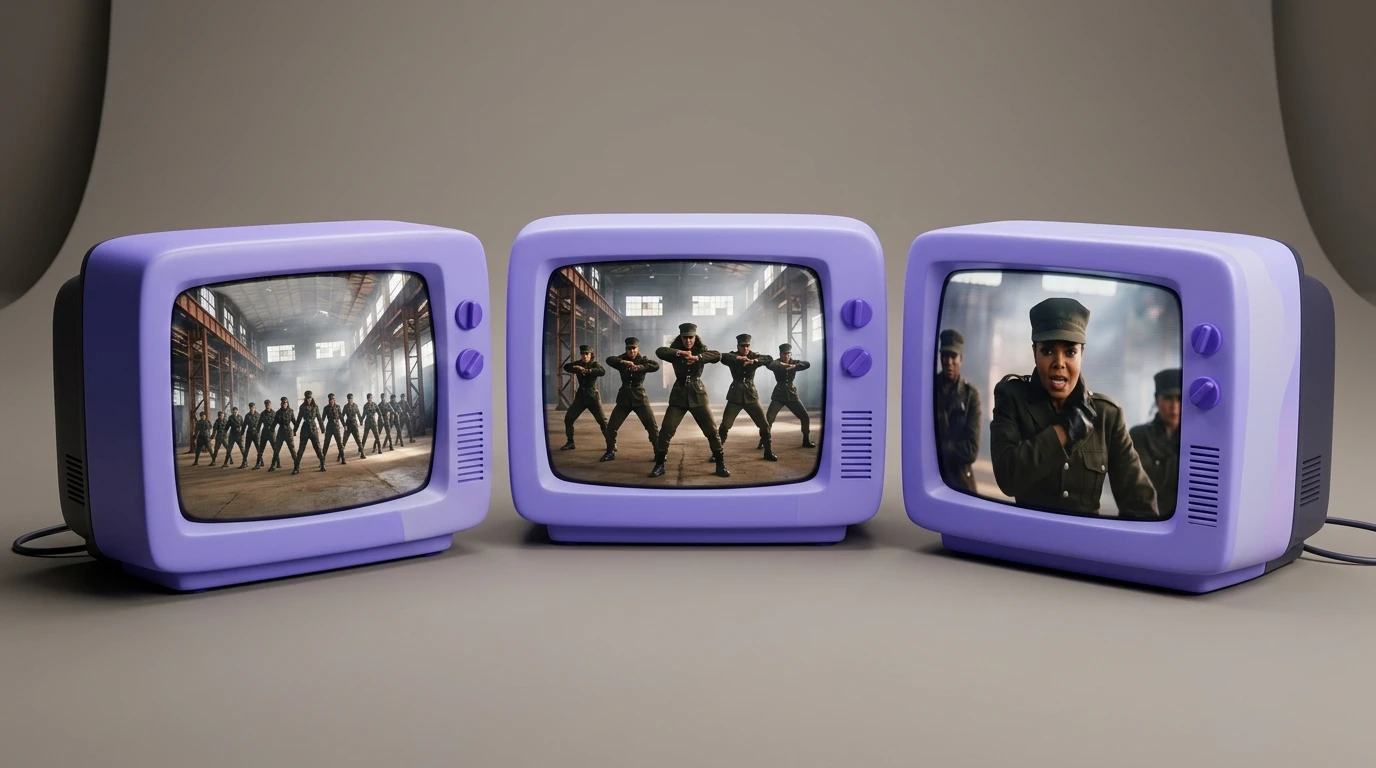
“Single Ladies” is the clearest starting point for movement-led direction. Watch Beyoncé’s official “Single Ladies” video and notice how changes in framing keep the dancers’ relationships readable. The performance feels continuous, although the video uses edits.
“Bye Bye Bye” takes a busier route. Its puppet imagery gives the dance a conceptual frame, while the action scenes create changes in scale and setting. Choose it when the reference needs both choreography and spectacle.
“Work It” makes movement feel playful and strange. Missy Elliott’s changing looks and surreal environments support a consistent comic attitude. It is a strong reference for expressive performance, but a poor fit for a song that needs quiet emotional exposure.
Performance with nowhere to hide
D’Angelo’s “Untitled” holds attention through the singer’s physical presence. With little scenery to inspect, small changes in expression become major events.
Watch how the framing reveals and withholds. That control makes the image feel active even when the production remains visually sparse. Choose this reference when the performer can carry sustained scrutiny, especially when an elaborate concept would distract from the vocal.
Minimalism exposes weak choices. An uncertain performance or arbitrary camera move has nowhere to disappear.
A visual world built around the artist
“Oops!... I Did It Again” builds recognition through its red costume against a stylized science-fiction setting. “Toxic” gives Spears a more active role, moving through disguises and encounters that propel the video forward.
Those controlled environments extend the visual-world building of eighties music videos into a more digitally constructed pop vocabulary. For a release brief, the useful lesson is the relationship between the artist’s silhouette and the surrounding world.
OutKast’s “Hey Ya!” uses a different device: André 3000 plays multiple members of a fictional television band. Repeated appearances become distinct characters through costume and performance. Watch the audience reactions too. They help sell the fictional broadcast.
“Bad Romance” pushes artist identity through fashion and recurring imagery. Billboard ranked it first in its critics’ list of videos released since 2000. Its strongest practical lesson is consistency: unusual scenes still feel related because the visual language remains controlled.
Animation that moves like the music
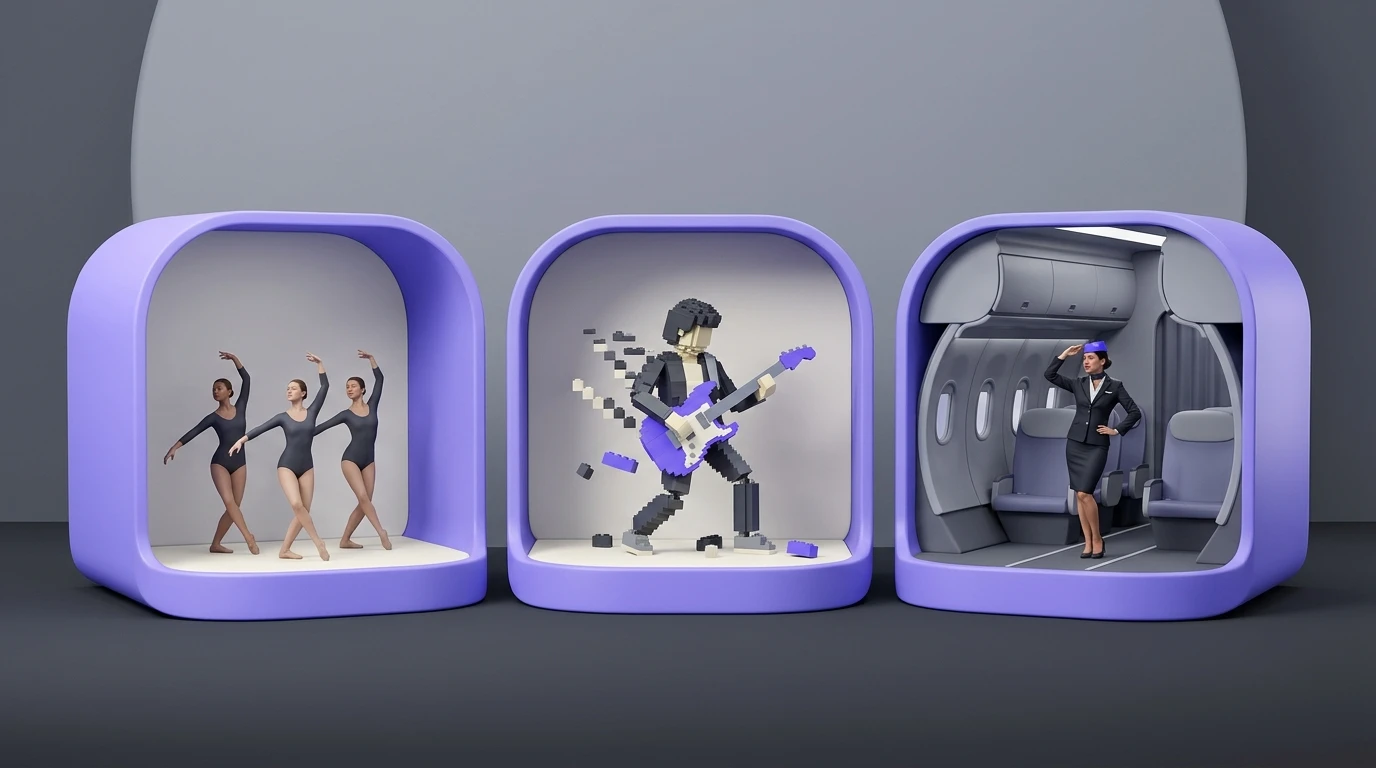
“Fell in Love With a Girl” turns LEGO construction into musical motion. Faces break apart. Bodies become patterns. The material itself supplies the transitions.
Pitchfork placed Michel Gondry’s video at the top of its 2000s list. Study how transformations answer the track’s energy, rather than treating the animation as decoration behind a song.
Daft Punk’s “One More Time” offers a smoother animated world. Its concert setting and consistent character design make the fantasy easy to follow.
Choose the White Stripes reference for fragmentation and rhythmic disruption. Choose Daft Punk when the track needs a stable world that the viewer can inhabit.
Comedy and movement as story engines
“The Real Slim Shady” builds momentum through caricatures and repeated identities. Its crowded visual jokes suit the song’s satirical voice. Skip it as a reference if the release needs emotional ambiguity or a restrained public persona.
“Weapon of Choice” gives Christopher Walken room to turn an ordinary hotel into a performance space. In Fatboy Slim’s official “Weapon of Choice” video, movement gradually changes the rules of the environment.
The useful principle is escalation. Establish an ordinary world clearly enough that its transformation feels surprising.
How to Choose a Reference for Your Own Release
Choose a video whose main mechanism serves your finished track. A close release date or limited production budget makes that distinction especially useful: borrowing the spaceship from “Oops!” creates a different production burden from borrowing its strong costume contrast.
Use this matrix to compare references. High, medium, and low are our qualitative ratings of how central each feature is to the treatment. Add your own candidate in the empty column.
| Creative requirement | “Untitled” | “Single Ladies” | “Toxic” | Your reference |
|---|---|---|---|---|
| Narrative progression | Low | Low | High | |
| Choreography | Low | High | Medium | |
| Close-up intimacy | High | Medium | Low | |
| Scene variety | Low | Low | High |
For a vocal-led release, choose “Untitled” as the starting reference. “Single Ladies” suits a movement-led concept, while “Toxic” makes more sense when story turns should carry the viewer between sections.
Then turn the reference into an executable brief:
- Map the finished song. Mark the verses and choruses before choosing images. Identify where the visual energy needs to change.
- Assign a repeatable visual rule. For an intimate vocal, that might mean tighter framing as the performance intensifies. For a narrative track, each chorus might return to a recurring location with something changed.
- Check continuity and delivery. Compare character appearance and lighting across planned scenes. Test social framing before approving compositions that only work horizontally.
A music videography workflow from treatment to final master turns those decisions into production instructions. Specify what must remain consistent between scenes, then make room for deliberate changes. That keeps a full-song video coherent when the visual world grows.
Frequently Asked Questions
Where can I watch 2000s music videos online for free?
Many are available on artists’ or labels’ official YouTube channels. Search the artist and complete song title, then favor the official upload over an unofficial compilation. Availability and age restrictions can vary by region.
Why do some 2000s music videos look blurry on modern screens?
Older masters and heavily compressed uploads can look soft on larger displays. An HD label alone does not establish that the original film elements were rescanned, so compare official versions when available.
Do music videos always use the album version of the song?
No. A video may use a radio edit, include dialogue, or extend its ending. Check the actual audio before borrowing its structure for an editing brief.
Take the intimacy of “Untitled” or the controlled world of “Toxic” into a brief built around your own track. At SongTrailer, one creative director carries a finished song from concept to a full-song master and social-ratio adaptation, combining human direction with AI-assisted visuals. To turn that reference into a release video, get in touch about your full-song production.