

For the choosin texas music video, the most defensible starting point is story first, symbolic mood second. Ella Langley’s song frames a romantic choice through Texas; WFAA reports filming at Fort Worth’s Stagecoach Ballroom. Read that location as narrative context, then test possible symbolism against what the official video actually shows.
- Separate an observable event from its possible meaning. A character’s action can establish story; a setting or costume needs context before it supports symbolism.
- Read the Stagecoach Ballroom as a documented location. Claims about what it represents remain interpretation unless the filmmakers explain them.
- Compare repeated choruses for changes in character behavior and visual emphasis. Repetition becomes meaningful when the image develops.
- Check the official upload’s description and end credits before assigning production roles or treating a cameo as evidence of a personal relationship.
Which criteria separate narrative from symbolic direction?
Narrative direction shows a change in someone’s situation. Symbolic direction gives an image meaning beyond its literal function. A music video can do both, but the evidence differs.
For a narrative reading, identify a desire, an obstacle, and a consequence. Someone wants a relationship to continue. A competing attachment threatens it. A decision changes what happens next. Performance can carry that story even when the video contains little dialogue.
For a symbolic reading, look for a visual pattern. A doorway might suggest separation, but a doorway also lets someone enter a room. Its symbolic weight grows if the framing repeats, the context changes, or the image connects clearly to the lyric.
Recurrence supports interpretation; it does not prove intent. A repeated object may be a deliberate motif, a continuity requirement, or simply part of the location.
Use the official release rather than a fan edit or isolated social excerpt. Start with Ella Langley’s official website to locate artist-linked material, then check the upload’s credits. A shortened clip can remove the setup that makes a later image intelligible.
How does the choosin texas music video use setting and character?
The clearest documented visual anchor is the Texas location. In its April 3, 2026 report, WFAA identifies Fort Worth’s historic Stagecoach Ballroom as a filming location for Ella Langley’s video.
That fact supports two readings. Literally, the venue places the production in an identifiable country-music environment. Symbolically, it allows “Texas” to become a place with social and emotional weight, rather than remaining only a word in the song.
The second reading is an interpretation. The location report establishes where filming happened, not what every ballroom image was intended to mean.
Yahoo Entertainment also names Luke Grimes and Miranda Lambert in its April 1, 2026 coverage. Their appearances are documented casting details. Their presence alone does not establish a character’s motivation, the reason for casting, or a relationship outside the production.
Read the visual layers separately
Performance framing, wardrobe, and production design can support either story or atmosphere. The useful question is what each element contributes to the emotional conflict.
Use this table while watching the official cut. These are viewing tests, not claims that each device appears in the video.
| Visual element | Evidence for literal storytelling | Evidence for symbolic mood |
|---|---|---|
| Performance framing | A reaction or eyeline connects the singer to an event | The singer’s framing expresses emotional distance without advancing an event |
| Setting | The location makes an encounter or decision possible | The location gathers meaning through repeated association with the lyric |
| Character behavior | A choice changes a relationship | A figure represents an attraction, memory, or competing world |
| Wardrobe | Clothing distinguishes people or establishes continuity | A repeated contrast reinforces belonging or separation |
| Production design and color | Objects and lighting make the space believable | A consistent visual treatment connects otherwise separate images |
| Recurring imagery | An object returns because the action requires it | Its return changes how the viewer understands the song |
Wardrobe deserves restraint. A hat, dress, or pair of boots can establish country identity without encoding a hidden message. A color palette can unify a production without assigning a moral meaning to each hue.
I would give observable behavior more weight than decorative detail. An action that changes the relationship offers stronger narrative evidence than a color association the viewer supplies afterward.
Which interpretation best fits the song structure?
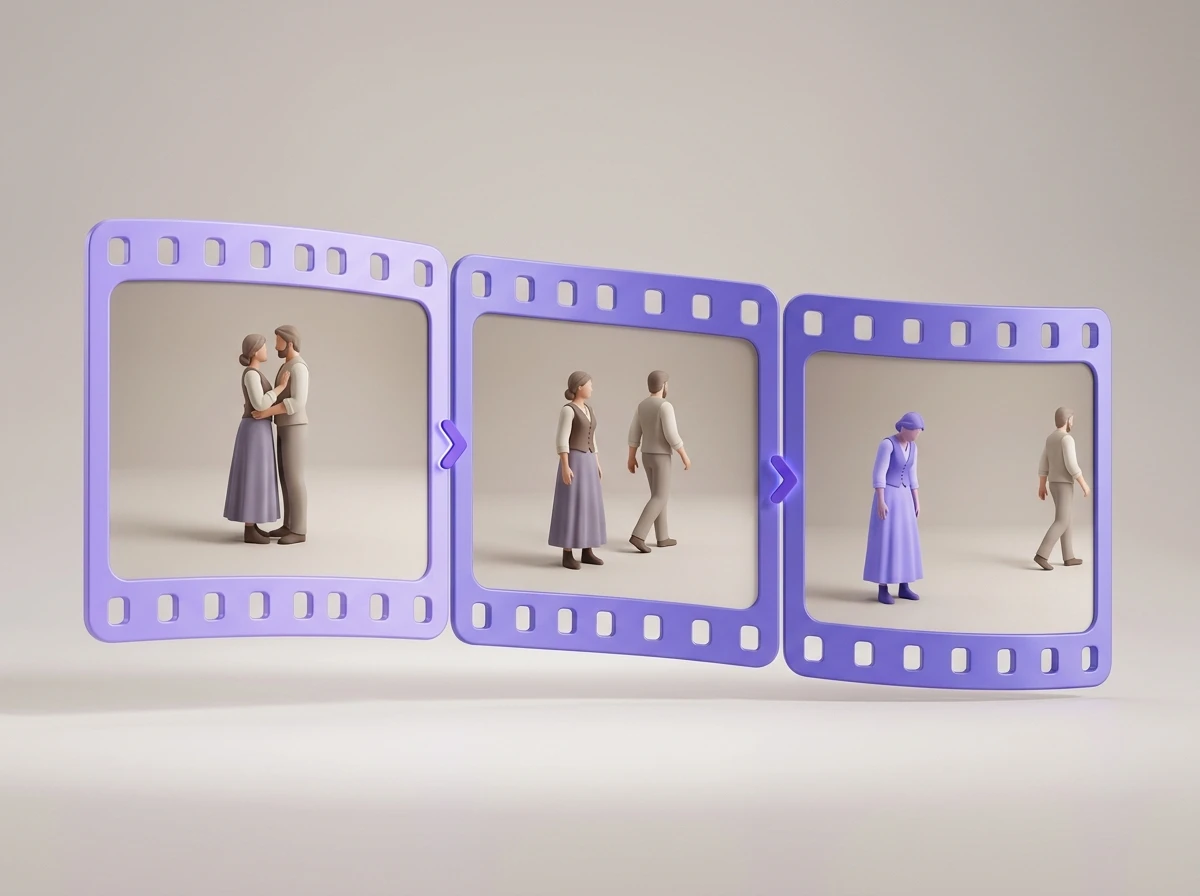
A narrative-first reading best fits the song’s central romantic choice. Symbolic mood can deepen that conflict by giving Texas emotional presence, but an elaborate hidden-code explanation needs more evidence than the title or location alone provides.
The full-song structure is the test. A verse can establish the situation; the chorus can sharpen the central choice. When the chorus returns, the edit has an opportunity to change how that choice feels.
There are different ways to create that development. A narrative edit can reveal a consequence. A mood-led edit can return to an established image with a different emotional context. Neither requires a new location at every section.
Chorus escalation means increased emotional weight, not simply more cuts. Faster editing may raise energy while weakening the clarity of a character’s decision. Holding on a reaction can sometimes do more.
Cinematic B-roll, meaning supporting footage outside the main performance or action, needs a job too. A location detail can establish place, bridge an edit, or reinforce a motif. If it repeatedly interrupts the relationship at the moment its stakes become clear, atmosphere starts competing with story.
For another release, map those functions before production. Our guide to music videography from treatment to final master provides the broader workflow; the practical starting point is to assign each song section a visual purpose before choosing individual shots.
The strongest reading of Langley’s concept therefore remains grounded in the romantic premise. Treat the Texas setting as a supporting emotional layer, and require visible patterns before assigning more specific symbolism.
What would each approach offer another country release?
Literal storytelling offers a clear emotional question. Symbolic direction offers more freedom to express a feeling without staging every lyric. The production trade-off is how much the viewer must infer.
Consider a hypothetical brief, not a description of Langley’s video: a finished country single about someone choosing another life over a relationship.
| Production decision | Story-led approach | Symbolic approach |
|---|---|---|
| Central idea | Show a choice and its consequence | Build a visual world around attachment and distance |
| Character arc | Move from expectation to recognition | Change the singer’s relationship to a recurring image |
| Continuity | Preserve believable actions, positions, and eyelines | Preserve the rules governing recurring images and visual treatment |
| Final chorus | Make the consequence clearer | Give an established motif a changed emotional context |
| Social excerpt | Select a moment that contains its own small dramatic turn | Select a recognizable image with an immediately readable feeling |
For the story-led version, a partner’s departure might provide the decisive action. For the symbolic version, an empty place beside the singer might carry the loss. Both ideas need development across the song; neither becomes cinematic merely because it looks expensive.
When a release date is close, keep the concept contained. A smaller cast and a location with a clear dramatic purpose can reduce production dependencies, provided the treatment still accounts for the whole track.
Continuity needs an explicit plan. Narrative footage must preserve the logic of actions. AI-assisted imagery needs stable character and visual rules so a change of scene does not accidentally suggest a change of identity. At SongTrailer, one creative director owns concept, pacing, and delivery for our human-directed, AI-assisted music videos for artists.
Social adaptation also belongs in the brief. A wide composition may communicate separation beautifully, then lose that meaning when reframed vertically. Protect the relationship between the important subjects in both versions.
When comparing directors, ask them to explain how the concept develops through the final chorus. Our guide to choosing a video production company helps structure that conversation, but a useful answer should describe the actual progression rather than promise a collection of attractive shots.
Frequently Asked Questions
Who are the people in the Choosin Texas music video? Ella Langley is the featured artist, and Yahoo’s coverage names Luke Grimes and Miranda Lambert among the appearances. Those names are not an exhaustive cast list; consult the official video’s description and end credits for complete credited roles.
Why is Luke Grimes in Ella Langley’s music video? His appearance is documented, but casting alone does not establish why he was chosen. A statement from Langley or the filmmakers would be needed to present a casting rationale as confirmed fact.
Where was the Choosin Texas music video filmed? WFAA identifies the historic Stagecoach Ballroom in Fort Worth, Texas, as a filming location. That confirms the venue’s involvement without establishing that every sequence was filmed there.
Are Luke Grimes and Ella Langley friends? Their appearance in the same production does not establish the nature of their personal relationship. A direct interview or statement would be stronger evidence than an inference from the video.
Watch the official cut with a narrow question: what changes between the opening and the final chorus? Record the visible action before assigning meaning to the imagery. If you are developing your own release, contact SongTrailer about creative direction with the finished track and a clear account of what you want the audience to feel by its end.