
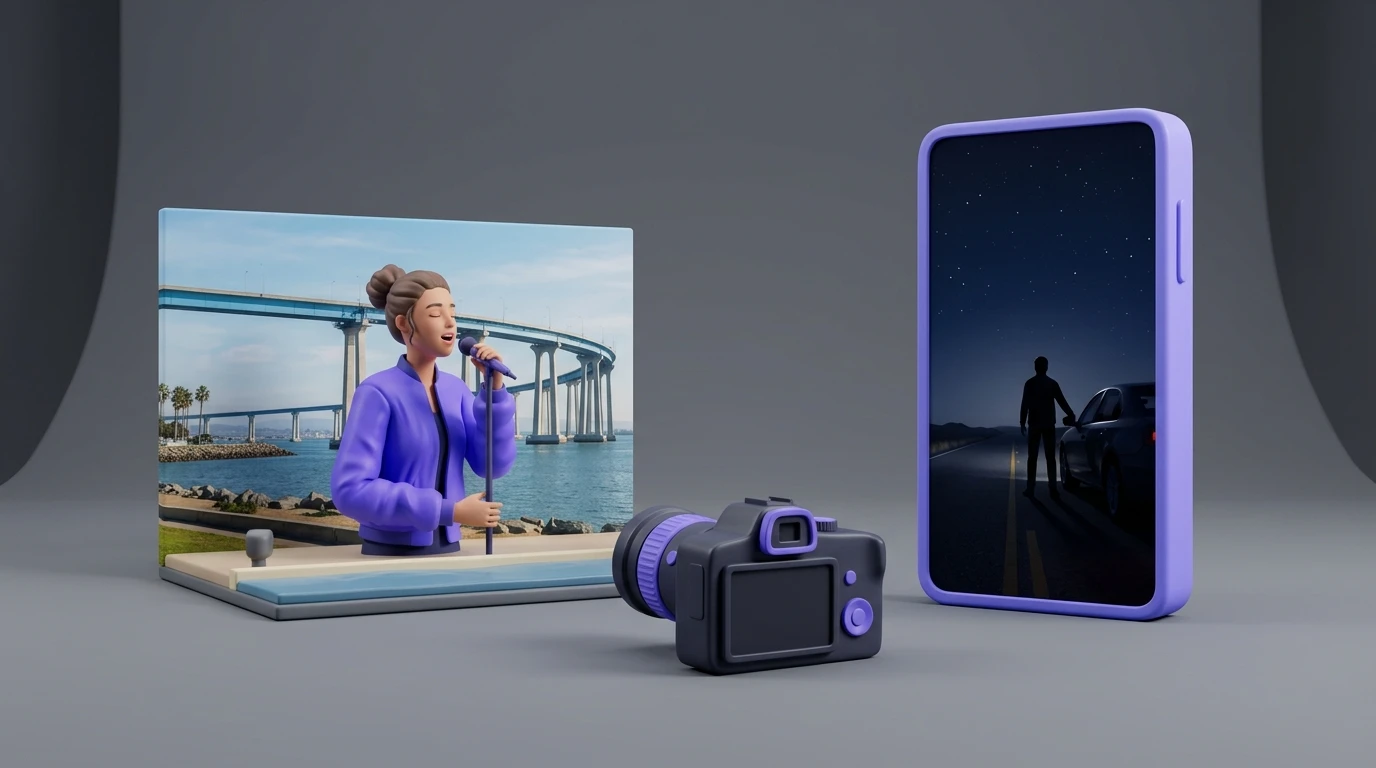
Choose video production in San Diego if your release needs the artist, the band, or a recognizable local setting on camera. A solo filmmaker can handle a contained performance. If the track needs a cinematic world you can build without a shoot, compare remote directors on full-song pacing, social framing, and delivery dates.
- Watch a complete music video before hiring. A reel can sell the lighting without showing how the editor keeps the second verse alive.
- Give every producer the same brief and ask for the total cost to deliver the full-song master and social cut. Get overtime and extra revisions spelled out.
- Set a master handoff date before release day. Leave time to check sync, review the vertical framing, and resolve upload issues.
What to check when choosing video production in San Diego
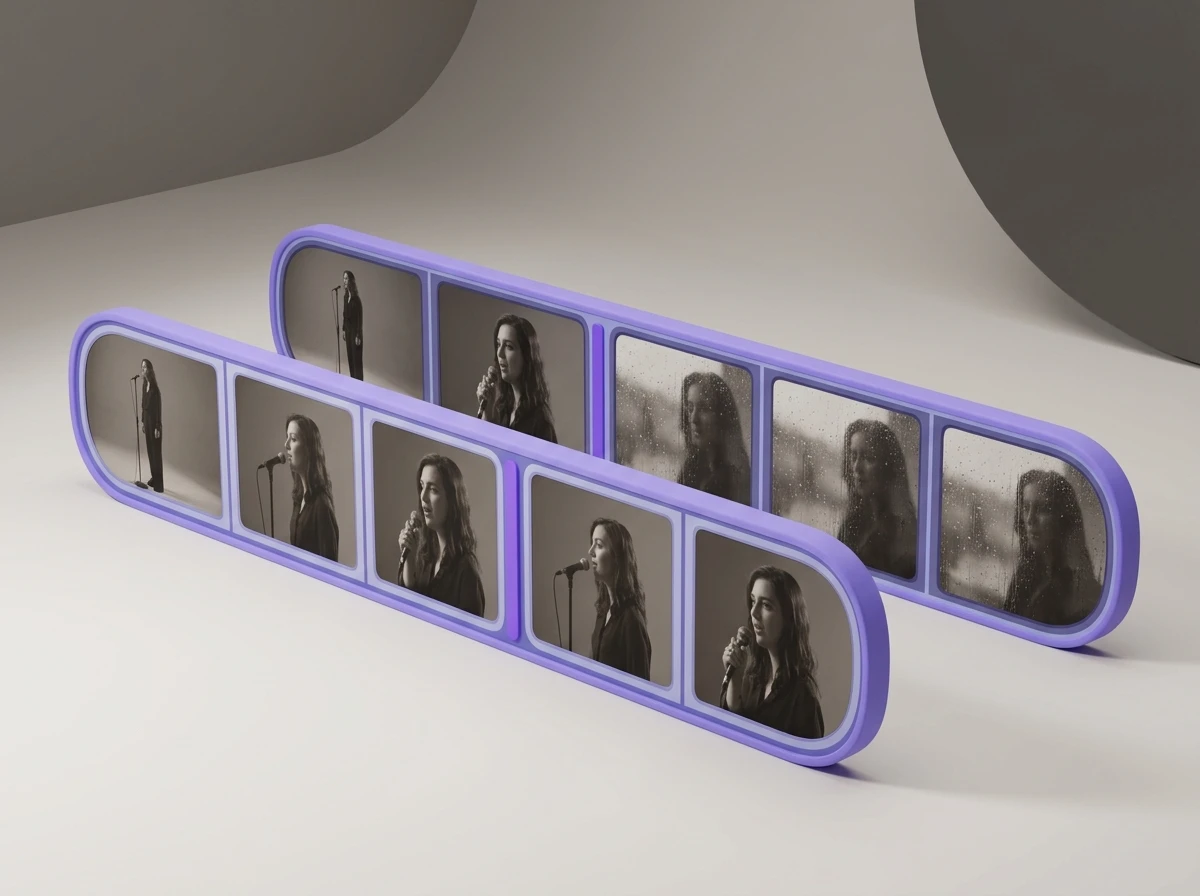
Start with one line in the brief: what must be real on camera? If fans need to recognize the singer or the exact street in the lyric, hire for that footage. If the concept is a figure leaving town at night and neither the face nor the city needs to be recognizable, a shoot is optional.
Then ask for a complete music video at a similar scale. Watch what happens when the second verse starts. Does the cut introduce a new image or change the performance coverage, or does it keep spending the same shots? Use the same checks for choosing a video production company with a studio and a solo filmmaker, and ask who directed and edited the sample you’re watching.
Set the deal-breakers before you compare bids. Name the master handoff date, the spending cap, and the files you need. If the label needs to run the footage in paid ads or recut it later, make those rights a condition of the job.
Compare a local crew, a solo filmmaker, and remote production
A local crew is worth hiring when the concept depends on a real performance with several setups, a recognizable location, or lighting that takes time to rig. A solo director-editor is a better fit for a contained performance, such as one singer in a rehearsal room. If the brief needs simultaneous coverage of the full band and tight shots of the drummer, ask how one operator will get both before you book.
Use this scorecard for a finished single about leaving town at night. The artist doesn’t need to appear, the same character has to carry the story, and the release needs a full-song master plus a social adaptation. Score each row 2 for a clear fit, 1 for a fit that needs confirmation, or 0 for a mismatch. Replace the example scores with what each bid actually commits to.
| Criterion | Local full-service crew | Local solo director-editor | Directed remote production | Your option |
|---|---|---|---|---|
| Can proceed without a shoot day | 0 - requires a shoot | 0 - requires a shoot | 2 - no shoot needed for this concept | |
| Same character holds across scenes | 2 - cast and wardrobe carry through | 2 - use the same performer across setups | 1 - ask to see continuity across shots | |
| Total cost can be set before work starts | 1 - confirm locations and overtime | 1 - confirm shoot and edit limits | 2 - SongTrailer has a flat package | |
| Full-song master and social adaptation | 1 - confirm both are quoted | 1 - confirm both are quoted | 2 - both are in the SongTrailer package |
Drop any option that misses a deal-breaker before adding the scores. If the artist’s performance becomes central to the video, the shoot moves from a cost to a requirement. Re-score the bids accordingly.
Where SongTrailer fits
At SongTrailer, one creative director owns the concept, pacing, and final edit for our AI-assisted music video service for artists, with a full-song master and social-ratio adaptation for $3,500 flat and delivery in about 5 to 7 business days after intake and direction lock. We recommend this route for a night-drive concept built around atmosphere and a recurring character, provided the visual direction can hold across the whole track. Hire a crew if the payoff is seeing your band play together in a real room.
How much does it cost to hire a video production company?
The useful price is the total for an approved master you can release. On a local shoot, ask whether the quote includes location fees, permits where needed, equipment, and overtime. On any bid, confirm what counts as a revision and whether the social adaptation is a separate edit or a crop of the master.
A performance quote can look cheaper until you find out that the vertical cut and the last round of edit notes are extra. Send the same request to each producer so those differences show up before you book:
I’m releasing a finished single on [release date] and need approved files by [handoff date]. The concept is [one sentence]. We must capture [performance or location, if any]. Please quote the total for a full-song master and [social format and duration]. Include the approval schedule, included revision rounds, any costs outside the quote, and the usage rights for each delivered file.
Work backward from the release date
Book against the approved master handoff, not the shoot date or the first-cut date. Working backward from handoff, reserve time for export checks and revisions, then agree on when the artist or label must approve the treatment. The workflow from treatment to final master helps you separate those milestones so a delay in creative approval doesn’t quietly consume the edit.
Send the final audio before anyone cuts to it. A longer intro or a different ending can shift synced performance shots and force a new edit. On a tight release, name one person to consolidate notes, and put the band’s feedback deadline on the same schedule as the producer’s delivery date.
Specify the masters and rights you need
Name the aspect ratio and duration for each file. YouTube’s upload recommendations identify 16:9 as the standard desktop aspect ratio, but a wide master won’t tell the editor how to frame the vertical version. When the night-drive cut keeps headlights at one edge and the character at the other, a center crop can lose both. Ask to review the vertical framing and specify whether you want the full song or an excerpt.
Put reuse rights in the agreement. Receiving the master file doesn’t tell you whether you own the edit, can use it in paid ads, or can hand it to another editor for a recut. Ask separately about raw footage and project files, and confirm whether any third-party material limits how you can use the finished video.
Frequently Asked Questions
Do I need a permit to shoot a music video at a San Diego beach?
It depends on who manages the beach and what the shoot involves. Start with the City of San Diego Film Office’s filming resources and confirm who handles your exact location before booking the crew. Describe the setup, including lighting and any space you need to reserve.
Can I make a music video for a song with a leased beat?
Yes, if the lease gives you permission to use the beat in a video. The U.S. Copyright Office treats the composition and the sound recording as separate works, so check that the license covers both rights as needed. Confirm whether it also covers monetization and paid promotion if those are part of the release.
Should a music video come out the same day as the single?
Release them together if the video is the main piece you want fans and press to share on launch day. If the audio launch already has its own campaign, a later premiere gives you a separate reason to promote the track. Set the video date after you’ve budgeted time for approvals and upload checks.
If the night-drive concept works without putting the artist on camera, bring the finished track, the master handoff date, and the lyric or beat that should drive the first cut. Get in touch with SongTrailer about your full-song video to discuss the master and social adaptation your release needs.