Lady Gaga’s “Abracadabra” and Kendrick Lamar’s “Not Like Us” lead our hottest music videos watch for November 2026, alongside Sabrina Carpenter and Billie Eilish. This is an editorial viewing edition built from 2024 and 2025 releases, rather than a live chart. Each pick offers a specific lesson in keeping a full song visually coherent.
- Watch the official full-length video before choosing a reference. A chorus clip cannot show whether an idea sustains the whole song.
- Give each reference a specific job. Borrow a framing device or a performance approach instead of copying an entire visual identity.
- Map the final chorus before approving a concept. Check that the key action also remains readable in a vertical frame.
The Hottest Music Videos on This Month’s Watch
We select for a strong visual idea and enough development to reward a complete viewing. The best music videos give the song a world you can recognize, then find reasons to keep you inside it.
Our guide to the greatest music videos of all time and what makes them last takes the historical view. This watchlist is narrower: choose the video that speaks to the visual problem in front of you.
| Artist and video | Visual character | Watch this if your release needs |
|---|---|---|
| Lady Gaga, “Abracadabra” | Large-scale choreography and stark costume contrast | A chorus that feels bigger without abandoning the visual world |
| Kendrick Lamar, “Not Like Us” | Direct performance and community-centered imagery | A stronger connection between the artist and their surroundings |
| Sabrina Carpenter, “Manchild” | Roadside absurdity and dry comic performance | Variety across locations without losing the artist’s identity |
| Billie Eilish, “BIRDS OF A FEATHER” | An ordinary office unsettled by impossible movement | A contained concept that can develop across a full song |
These are different viewing experiences. Start with spectacle if you need energy. Start with the office if you need a premise.
What to Watch in Each Video
Lady Gaga: “Abracadabra”
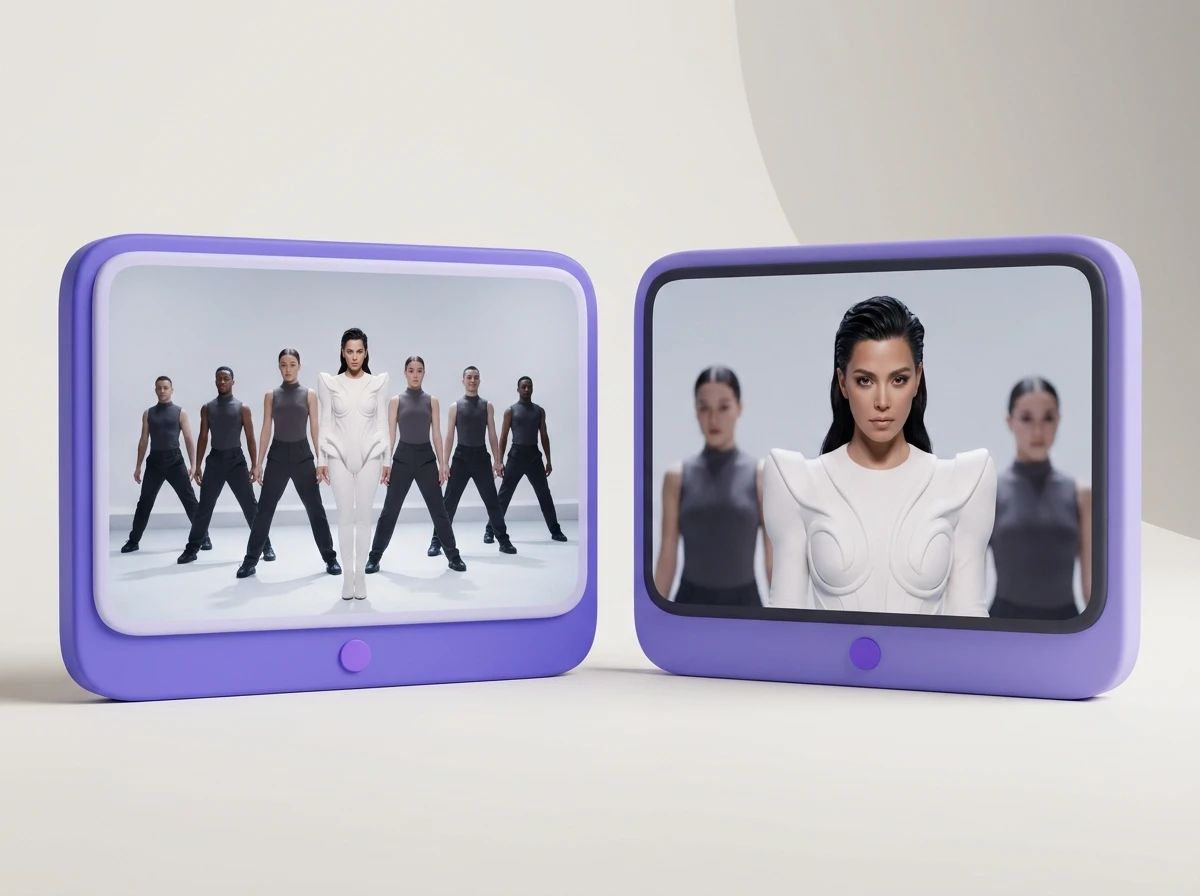
Lady Gaga’s official “Abracadabra” video, released in 2025, makes a crowded performance feel controlled. Watch the changes between wide formations and closer views of Gaga, especially as the chorus takes over.
The wide shots let you read the choreography. The tighter framing redirects attention toward expression, so the video can change intensity without constantly introducing another location.
Study the shot scale before the styling. If you are collecting references for the best dance music videos, note which movements require the whole body to remain visible. Our study of Robert Palmer music videos and the power of repetition offers another perspective on how repeated staging creates a recognizable performance image.
Kendrick Lamar: “Not Like Us”
Kendrick Lamar’s official “Not Like Us” video, released in 2024, moves between individual performance and collective presence. The crowd scenes give the refrain a public life beyond the person delivering it.
Watch who occupies the frame with Lamar. A location becomes more meaningful when the people in it appear connected to the artist, rather than functioning as interchangeable background.
For an independent release, that is a useful distinction. A familiar place and people with a real connection to the artist can give a video more identity than an impressive location chosen only for its appearance.
Sabrina Carpenter: “Manchild”
Sabrina Carpenter’s official “Manchild” video, released in 2025, builds its world through roadside encounters and visual absurdity. The surroundings keep changing, while Carpenter’s dry performance holds the tone together.
Watch the handoff between scenes. A new situation works because it extends the same comic attitude, giving the viewer another variation on an established idea.
Continuity can come from behavior. That matters when a concept needs several locations, although travel and setup changes can put pressure on a tight release schedule. Borrow the consistent performance tone before borrowing the location count.
Billie Eilish: “BIRDS OF A FEATHER”
Billie Eilish’s official “BIRDS OF A FEATHER” video, released in 2024, makes an ordinary office feel physically unstable. Eilish is pulled through the space, turning an emotional attachment into visible movement.
The setting stays recognizable as the action becomes stranger. That stable environment gives the impossible movement something to push against.
Watch how long the video commits to its central device. For a finished track that still lacks visuals, a contained physical idea can be a stronger starting point than a collection of unrelated cinematic scenes. The premise gives every new shot a rule to follow.
Turn a Watchlist Pick Into Your Own Visual Brief
A useful reference note explains what a video does for the song. “Make it cinematic” leaves too much unresolved, especially when the release date is close and the production needs decisions rather than more mood-board images.
Use this viewing process before writing the brief.
- Watch without stopping. Record the feeling you are left with, using plain language rather than technical terms.
- Watch again against the song structure. Mark where the visual approach changes and whether that change belongs to a verse, chorus, or other musical turn.
- Translate the device into your own world. Describe what you will keep, what you will change, and how the idea reaches the final section of your track.
Assume you are briefing a finished synth-pop single about being pulled back into a relationship. Taking the physical logic of “BIRDS OF A FEATHER” as a reference, set your version in a rehearsal room, with the performer repeatedly drawn toward an empty chair.
Keep the opening verse still. Introduce the pull at the chorus, then make the final chorus a deliberate return toward the chair. The ending changes the meaning of the movement while preserving the same visual rule.
That is enough to begin a conversation about production. Carry the note into a music videography plan from treatment to final master before commissioning shots, so the full-song structure remains part of the plan.
Copy this brief and replace the fields:
Finished track:
Release date:

Emotional movement:
The song begins feeling:
The song ends feeling:

Reference video:
Specific device worth studying:
Elements we will deliberately change:

Opening and verse:
Chorus:
Final section and ending:

Continuity rule:
The visual detail or behavior that stays consistent:

Primary master framing:
Social-ratio adaptation:
The key action that must remain visible in both:

Production limits:
Locations, performance needs, and available assets:

Approval priority:
The decision that must be locked before production begins:
If the deadline is close, reduce the number of scene changes before weakening the central idea. A coherent full-song video gives the editor something to build. Disconnected images leave the hardest decisions until the final cut.
Check social framing during the concept stage, too. A wide formation may need a separate composition for a vertical adaptation, while a contained performance may offer more room to reframe.
Frequently Asked Questions
What is the top-rated music video?
There is no universal top-rated music video. Audience ratings, editorial lists, and platform charts measure different things, so check the method behind any claimed winner.
How do I find genuinely new music videos each month?
Follow official artist and label channels, then check the upload date of the full-length official video. Reuploads and short clips can make an older release look new, so confirm which version you are watching.
Can I use another artist’s music video as a visual reference?
Yes, you can use it to explain a creative approach, such as restrained camera movement or a recurring physical action. Using its actual footage in your release is a separate rights question and may require permission.
A rehearsal-room concept built around a pull toward an empty chair gives the production a clear starting point. SongTrailer develops finished tracks into human-directed, AI-assisted full-song videos with a primary master and social-ratio adaptation. Get in touch about your release’s visual direction when you have the track and a reference device you can describe in plain language.