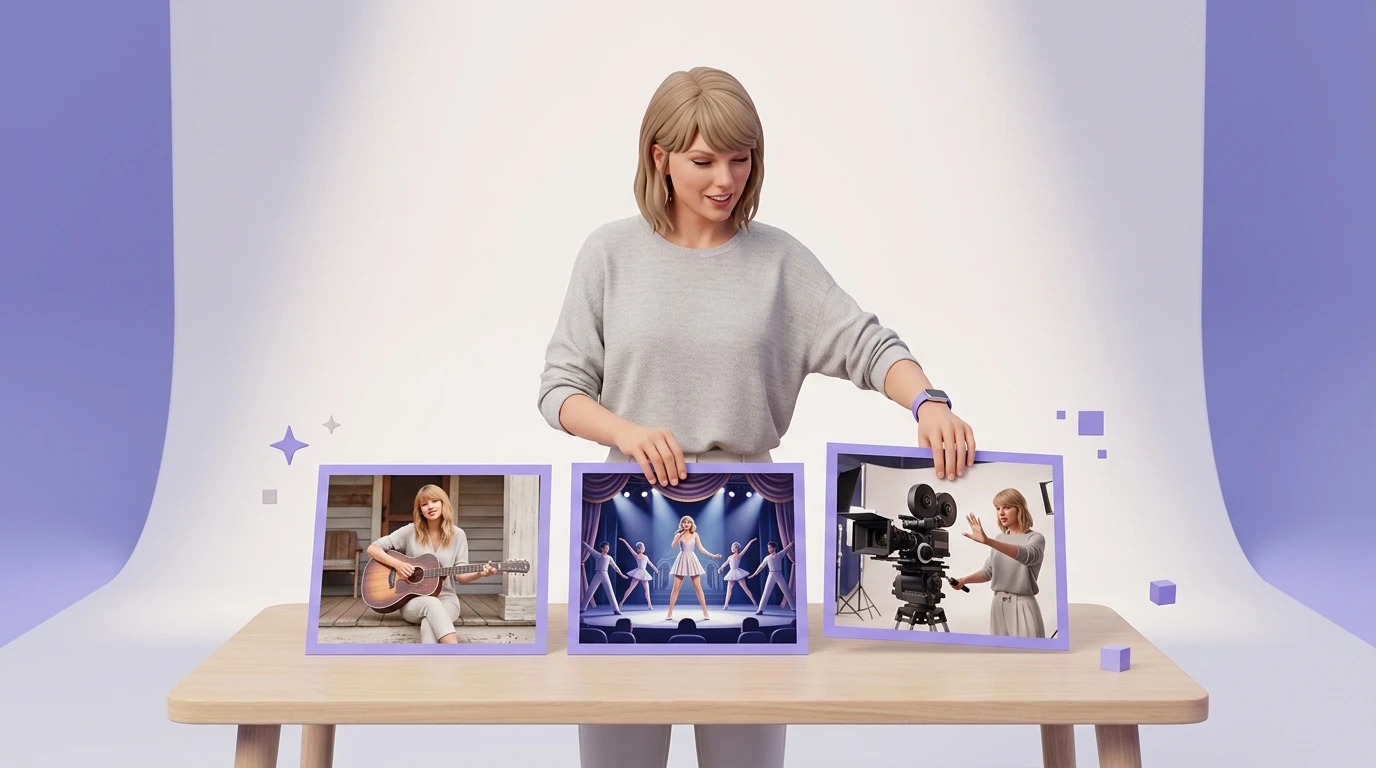
A useful taylor swift music videos list starts with official, song-length releases, from “Tim McGraw” in 2006 through country storytelling, pop spectacles, and self-directed films. Below, the videos are organized by release year and album era. Clear inclusion rules keep lyric clips, tour films, alternate versions, and featured appearances from blurring the chronology.
- Use a video’s first official release year, rather than its song’s album year, to place it in order.
- Keep full-song performance videos in the main list, but separate lyric videos and full concert films.
- Treat a new recording as a new video entry only when it receives its own official song-length video.
Which releases belong on a Taylor Swift music videos list?
The main list covers official, song-length videos released for Swift’s own recordings, including narrative films, performance edits, and videos built from home or backstage footage. It also includes songs with credited collaborators when the release is part of Swift’s catalog. The year shown is the video release year; a video can arrive well after its album.
For the most current uploads, check the official Taylor Swift video catalog on Spotify. Spotify’s September 2026 catalog announcement confirms that official videos are available there. Catalogs can gain new releases, so use the platform listing to check anything published after the entries below.
| Year | Album era or release | Official videos in release order |
|---|---|---|
| 2006 | Taylor Swift | “Tim McGraw” |
| 2007 | Taylor Swift | “Teardrops on My Guitar”; “Our Song” |
| 2008 | Taylor Swift / Fearless | “Picture to Burn”; “I’m Only Me When I’m with You”; “Should’ve Said No” (live performance); “Change”; “Love Story” |
| 2009 | Fearless | “White Horse”; “You Belong with Me”; “Fifteen” |
| 2010 | Fearless / Speak Now | “Fearless” (tour footage); “Mine” |
| 2011 | Speak Now | “Back to December”; “Mean”; “The Story of Us”; “Sparks Fly” (tour footage); “Ours” |
| 2012 | Soundtrack / Red | “Safe & Sound” with The Civil Wars; “We Are Never Ever Getting Back Together”; “Begin Again”; “I Knew You Were Trouble” |
| 2013 | Red | “22”; “Everything Has Changed” with Ed Sheeran; “Red” (tour footage); “The Last Time” with Gary Lightbody (live performance) |
| Year | Album era or release | Official videos in release order |
|---|---|---|
| 2014 | 1989 | “Shake It Off”; “Blank Space” |
| 2015 | 1989 | “Style”; “Bad Blood” featuring Kendrick Lamar; “Wildest Dreams”; “Out of the Woods” |
| 2016 | 1989 | “New Romantics” (tour footage) |
| 2017 | Soundtrack / Reputation | “I Don’t Wanna Live Forever” with Zayn; “Look What You Made Me Do”; “…Ready for It?” |
| 2018 | Reputation | “End Game” featuring Ed Sheeran and Future; “Delicate” |
| 2019 | Lover / standalone single | “ME!” featuring Brendon Urie; “You Need to Calm Down”; “Lover”; “Christmas Tree Farm” (home footage) |
| 2020 | Lover / Folklore / Evermore | “The Man”; “cardigan”; “willow” |
| 2021 | Fearless (Taylor’s Version) / Red (Taylor’s Version) | “The Best Day (Taylor’s Version)” (home footage); “All Too Well: The Short Film”; “I Bet You Think About Me” featuring Chris Stapleton |
| 2022 | Midnights | “Anti-Hero”; “Bejeweled” |
| 2023 | Midnights / Speak Now (Taylor’s Version) | “Lavender Haze”; “Karma” featuring Ice Spice; “I Can See You” |
| 2024 | The Tortured Poets Department | “Fortnight” featuring Post Malone; “I Can Do It with a Broken Heart” (backstage and tour footage) |
| 2025 | The Life of a Showgirl | “The Fate of Ophelia” |
A performance edit belongs beside a staged narrative when it is an official song-length video. A full concert film does not. That distinction matters for “Fearless,” “Red,” and “I Can Do It with a Broken Heart,” which use real performance or behind-the-scenes material without becoming concert-film entries.
How did the country-era videos establish character and story?
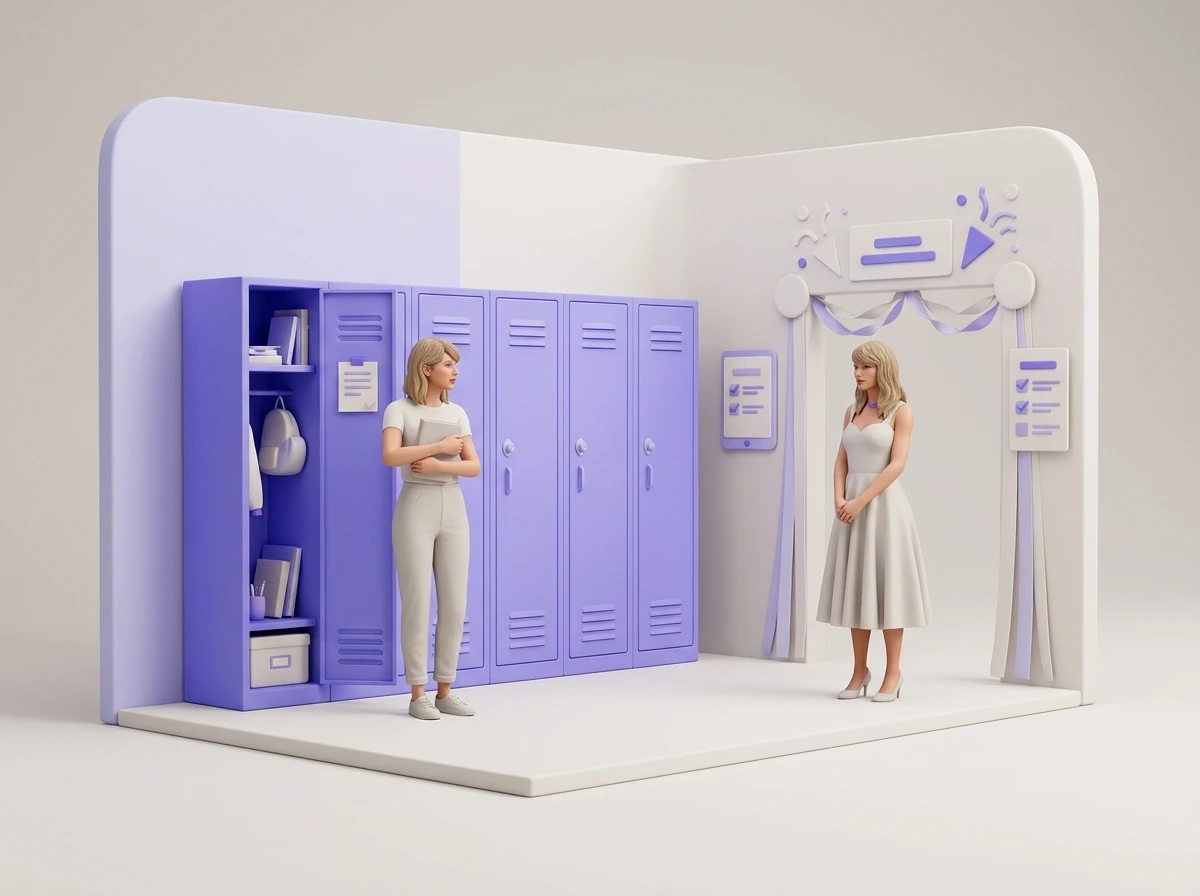
The early videos make a song’s relationship legible almost immediately. “Tim McGraw” uses memory and rural settings; “Teardrops on My Guitar” puts an unspoken crush in a school setting; “Our Song” gives the performance a brighter, more playful frame. Trey Fanjoy directed “Tim McGraw” and “Love Story,” two videos that show how a recognizable world can carry a song without requiring a complicated plot.
“Love Story” expands that approach with period costume and a fairy-tale setting. “You Belong with Me,” directed by Roman White, makes the contrast sharper: Swift plays both the girl next door and her rival. Casting, costume, and location do the work before a viewer needs to follow every lyric. It is a useful lesson for anyone planning a narrative music video: decide what the audience must understand on sight, then build the music video treatment and final master around those visual cues.
The Speak Now and Red years widen the range. “Mean” turns its characters into distinct scenes, while “We Are Never Ever Getting Back Together” leans into choreographed, theatrical movement. “I Knew You Were Trouble” gives the relationship a darker dramatic frame. Country-pop crossover changed the sound, but the strongest videos kept one habit: give the viewer a person and a situation to follow.
How did the pop eras change scale, symbolism, and direction?
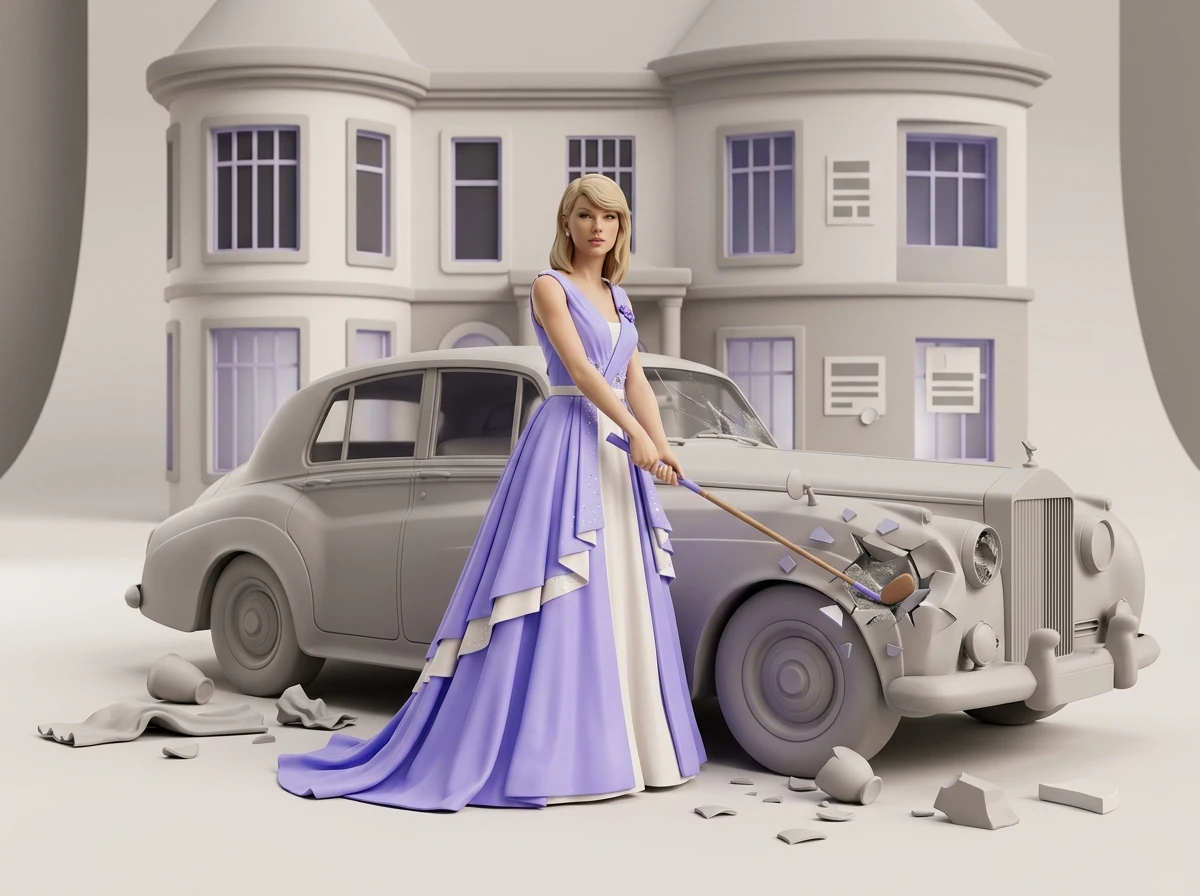
The 1989 videos make Swift’s public image part of the story. In “Blank Space,” directed by Joseph Kahn, a grand house, polished wardrobe, and escalating destruction turn tabloid caricature into a character Swift can perform. “Bad Blood” builds an action-film world around its remix; “Wildest Dreams” borrows the texture of classic screen romance. Different settings. Deliberate pacing.
Reputation pushes visual callbacks further. “Look What You Made Me Do,” also directed by Kahn, stages earlier Swift personas as costumes and set pieces. A viewer can enjoy the spectacle without decoding every reference, but the references reward a second watch. By Lover, “ME!” and “You Need to Calm Down” replace the darker palette with bright, tightly designed worlds.
Scale alone cannot hold a full song. “Delicate” works because its change in mood follows a character through the track; “cardigan” holds attention with a simpler visual passage between spaces. For artists weighing sets against a more contained concept, the practical test is whether the idea can sustain the entire master, then survive a social-ratio adaptation. Our guide to choosing a video production company covers the delivery questions worth settling before a release date gets close.
How should alternate versions and self-directed works be categorized?
Keep recording versions, video versions, and directorial credits as separate facts. The “Bad Blood” video uses the Kendrick Lamar remix, so that is the version to name. “All Too Well: The Short Film” belongs under the Red (Taylor’s Version) period and its longer recording, rather than beside the original Red singles. An official lyric upload of another Taylor’s Version does not automatically create a new entry in this list.
Swift co-directed videos before directing “The Man” on her own. Her later self-directed work includes “cardigan,” “willow,” “All Too Well: The Short Film,” “Anti-Hero,” “Bejeweled,” “Lavender Haze,” “Karma,” “I Can See You,” and “Fortnight.” Billboard’s guide to Swift’s self-directed videos is a useful credit check; do not assume every video released during this period has the same director. “I Bet You Think About Me,” for example, was directed by Blake Lively.
Keep videos for other artists’ releases in a featured-appearance category, even when Swift is central to the song or appears on screen. Examples include B.o.B’s “Both of Us,” Tim McGraw’s “Highway Don’t Care,” Sugarland’s “Babe,” and Big Red Machine’s “Renegade.” This preserves a usable chronology of Swift’s own releases without losing the collaborations fans may be looking for.
How can you check an uncertain video?
Start with the official artist or label upload. Confirm the song title and version, whether the upload is identified as an official music video, and whether it runs as a song-length piece rather than a lyric clip, trailer, advertisement, or fan edit. Then record the video’s publication date and credited director separately from the album release date.
For a creative reference, record one more detail: what keeps the visual world continuous for the full track? It might be a recurring character, a stable location, or a controlled shift in color and pace. That question is more useful than collecting striking frames if you are developing a full-song, AI-assisted music video for an artist against a fixed release schedule.
Frequently Asked Questions
How many Taylor Swift music videos are there?
The total depends on whether you count official live edits, new videos for Taylor’s Version recordings, and videos released by collaborating artists. Set those rules first, then count the current official catalog; an undated total quickly becomes unreliable.
What are some of Taylor Swift’s most popular music videos?
“Blank Space,” “Shake It Off,” “Bad Blood,” and “Look What You Made Me Do” are strong starting points for her large-scale pop visuals. For a current most-watched ranking, compare view counts on the official uploads on the same day.
Do lyric videos belong in a chronological music videos list?
Keep them in a separate category. They are official uploads, but mixing lyric clips with narrative and performance videos makes it harder to follow how Swift’s visual direction changed.
Are the Taylor’s Version videos duplicates of the originals?
A rerecorded song does not automatically have a new music video. Count a Taylor’s Version entry when it has its own official video, as “The Best Day (Taylor’s Version)” and “All Too Well: The Short Film” do.
Watch the chronology with the song playing, not just the thumbnail in view. Character, pacing, and a consistent visual world explain why these videos stay memorable. If you are shaping a finished track into a full-song release visual, get in touch with SongTrailer to discuss the direction.