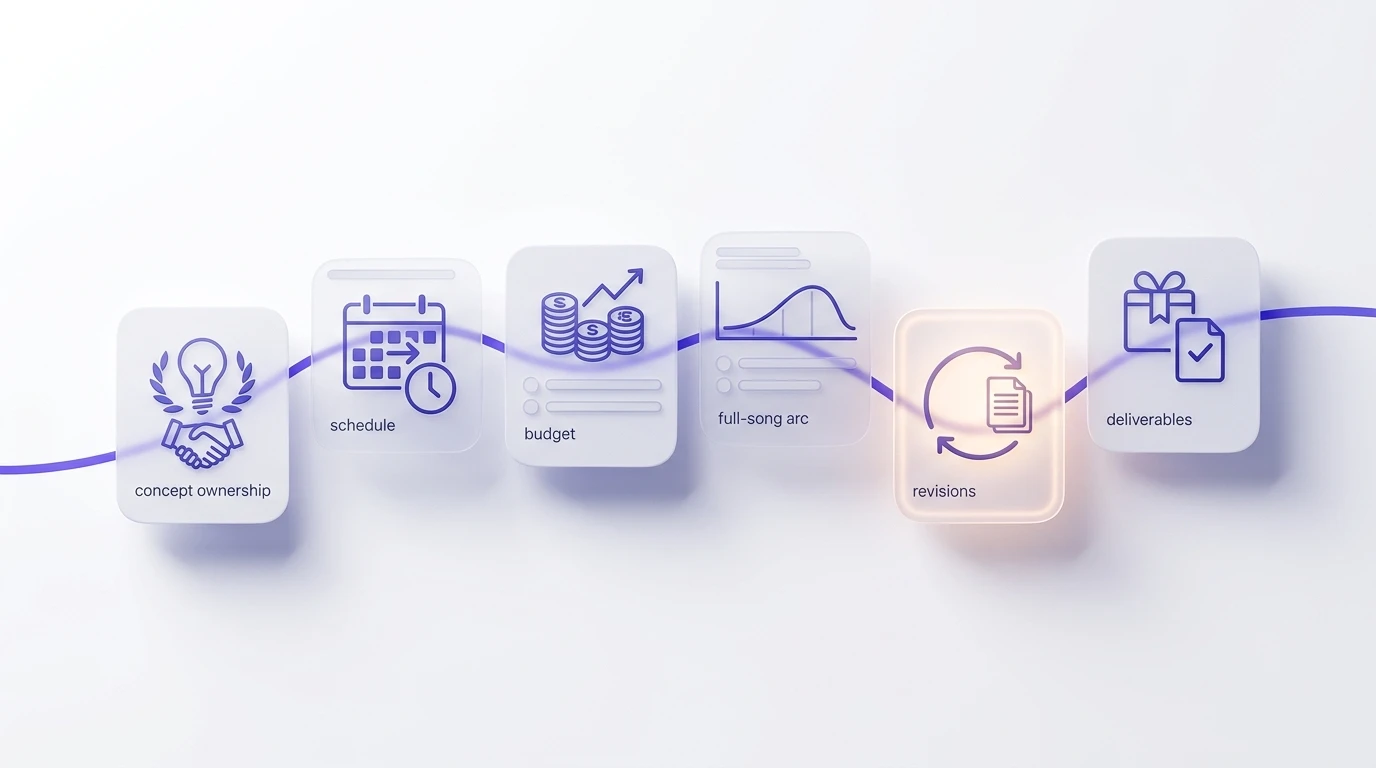
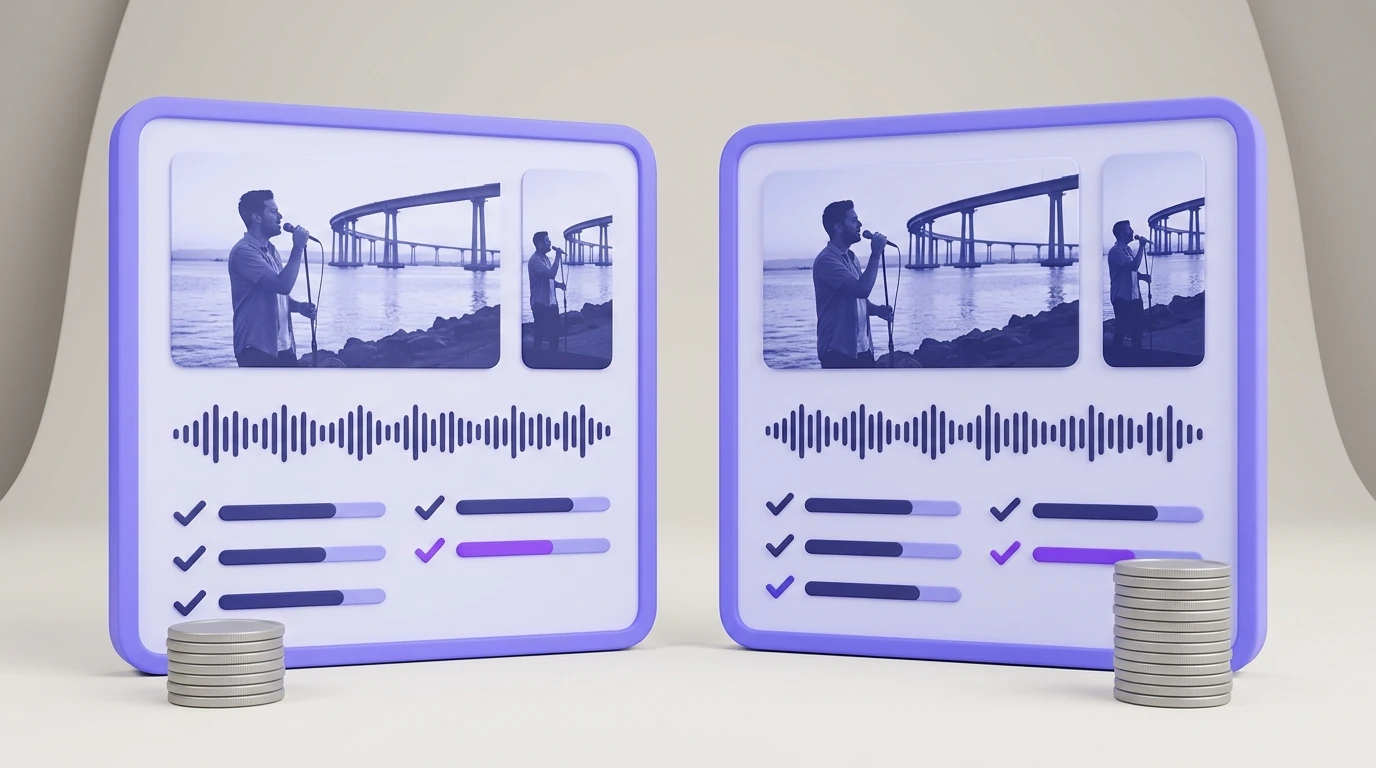
If your release date is approaching, compare video production companies san diego by matching deliverables before comparing totals. A full-song master and a short teaser are different products. Use the quote checks below to expose missing costs and choose between a local shoot and a remotely produced music video.
- Give every provider the same finished track and delivery brief. Otherwise, their prices describe different jobs.
- Request a complete music video sample. A highlight reel cannot demonstrate pacing across a full song.
- Compare the total required to reach your release-ready deliverables, including any separately priced edits or format adaptations.
- Confirm the schedule’s starting conditions and the rights to the delivered files before paying a deposit.
Comparing quotes for “video production companies san diego”
A comparable quote describes the finished video, the work included, and the conditions that can change the price. For an artist or label, the first decision is whether the video requires filmed performance or can tell its story through a directed visual world.
Define that requirement before sending the brief. If the singer must appear on camera with recognizable facial detail, a production proposal needs to explain how that footage will be captured. If the concept is an atmospheric world built around the track, a shoot may be optional.
I would judge providers against creative fit, complete scope, cost certainty, deadline credibility, and delivery rights. Our guide to choosing a video production company expands that evaluation beyond the reel; use the same criteria for every quote you receive.
| Quote item | What the proposal should state | What to clarify if missing |
|---|---|---|
| Creative direction | Who owns the treatment and final visual decisions | Who resolves conflicting feedback? |
| Full-song scope | The video covers the supplied final audio from beginning to end | Is this a full-song master or a teaser? |
| Capture or visual creation | Filming requirements or the method used to create visuals | Does the concept require anything outside the package? |
| Editing and refinement | Included review stages and the boundaries of revisions | What happens if the concept changes after approval? |
| Delivery formats | Master specifications and each social adaptation | Is the social version a reframe, a shorter edit, or both? |
| Schedule | Starting conditions, approval deadlines, and final delivery | Does the estimate begin at booking or after direction approval? |
| Price and rights | Included costs, possible additions, and rights to delivered files | What would trigger another invoice? |
Send the same brief to every provider. Include the finished track, intended release date, visual references, and required delivery formats. Changing the brief between conversations makes even transparent quotes difficult to compare.
Which production model fits your release?
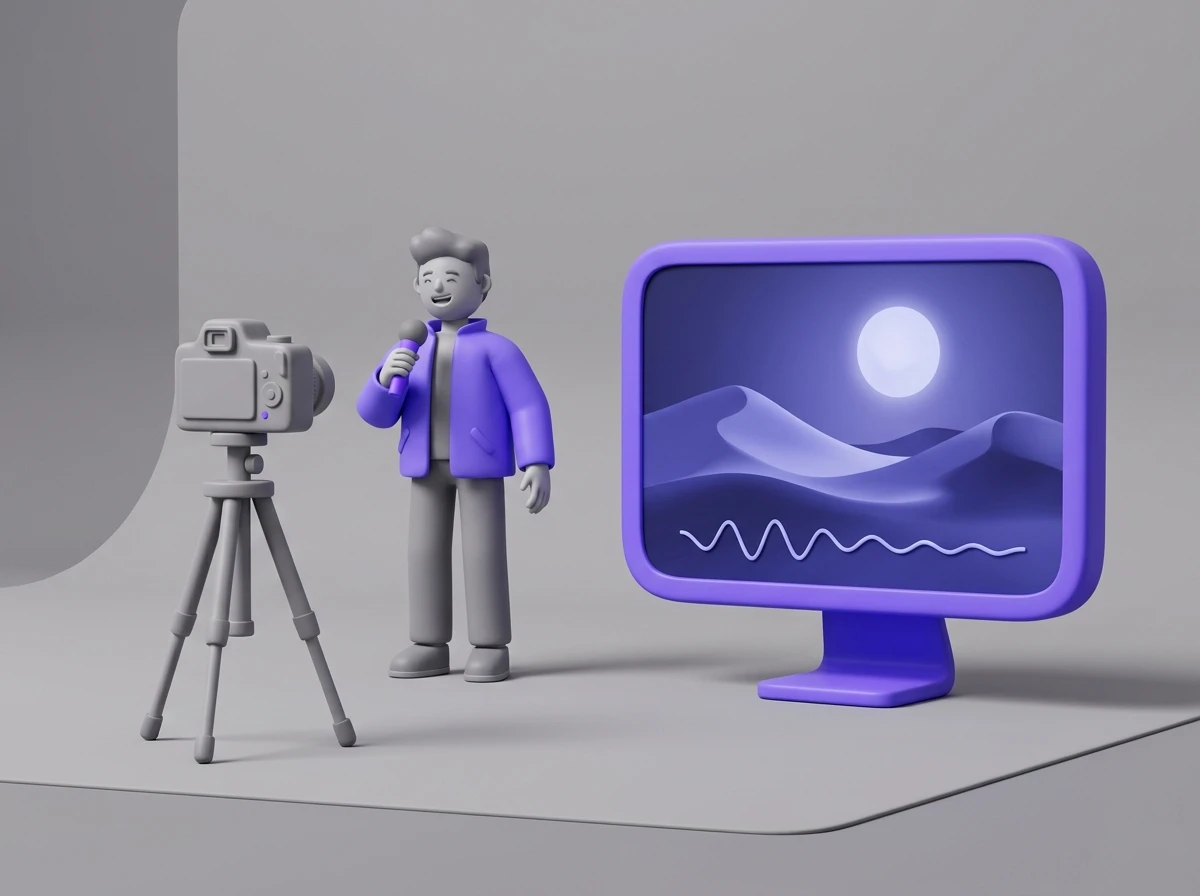
Choose the production model around what must appear on screen. Local access matters when you need filmed performance, a specific location, or an on-set crew. Remote production can fit when the music video depends on created visuals rather than physical capture.
The ratings below describe workflow fit, not the quality of individual companies. “Conditional” means the proposal must demonstrate that capability. No production model guarantees a strong film without a suitable concept and edit.
| Production model | Filmed artist performance | Created visual world | Fixed-price certainty | Best fit |
|---|---|---|---|---|
| Local full-service production company | Strong fit | Conditional | Depends on the contract | A concept requiring crew coordination and controlled filming |
| Local videographer or small crew | Strong fit for a manageable shoot | Conditional | Depends on the contract | A focused performance concept with clearly assigned creative ownership |
| SongTrailer’s human-directed, AI-assisted production | Outside the stated package | Strong fit | Published flat package | A finished track needing full-song cinematic visuals without a conventional shoot |
Choose a full-service local company if the concept depends on physical production. Ask who handles locations and on-set logistics. Skip that route if you would be paying for a shoot your concept does not need.
Choose a videographer or small crew if the shoot is contained and someone clearly owns the treatment and edit. A smaller team can produce excellent work. The risk is an ownership gap: the camera operator expects you to direct, while you expect them to deliver the entire creative concept.
At SongTrailer, one creative director owns concept, pacing, and delivery, combining AI-assisted visuals with human direction and editing. SongTrailer’s AI-assisted music video package for artists costs $3,500, including a full-song master and a social-ratio adaptation.
Choose that model when the finished song needs a cohesive visual world and predictable production cost. Skip it if your brief requires a conventional performance shoot or exact documentary footage of a real event. SongTrailer’s stated workflow is remote creative production, not a claim of a San Diego studio or local filming crew.
What changes the real cost of a local shoot?
The useful price is the total required to deliver the agreed video. A lower headline quote can become the more expensive choice if essential production work or finishing is excluded.
For video production in san diego, ask whether location charges and permits sit inside the quote. When filming involves public property, consult the City of San Diego’s filming guidance and confirm who handles approvals. A location reference in a treatment does not establish permission to shoot there.
Crew, lighting, equipment, and insurance can also change the production cost. Their relevance depends on the concept. A performance filmed in a controlled interior needs a different plan from a night exterior with moving vehicles.
Editing exclusions deserve equal attention. Clarify whether color finishing is included and whether visual effects require separate approval. Ask how extra review work is billed.
Normalize the quotes before choosing. Ask each provider to return an updated total containing every mandatory deliverable in your brief. Keep optional additions separate, so an attractive extra cannot disguise a missing essential.
Also confirm payment milestones and rescheduling terms. A usable quote explains what happens when you change the shoot date or replace the audio after editing has begun.
Can the production schedule meet your release date?
A credible video production timeline names its starting conditions and approval dependencies. “Delivery next week” is incomplete if the producer still needs the final track or an approved treatment.
Work backward from when you need upload-ready files. Leave room to watch the master in full and check the platform export before publishing. Your public release date should not double as the first opportunity to inspect the video.
SongTrailer’s stated turnaround is 5-7 business days after intake and direction lock. That condition matters: the production clock starts after the necessary materials and creative direction are settled, rather than automatically beginning when someone makes an inquiry.
Ask every provider when you will see the treatment and the review cut. The workflow in music videography from treatment to final master helps define those approval stages; use them to identify where late feedback could move delivery.
Review the whole song. Watch whether the visual energy changes when the music changes, and whether the world remains coherent between scenes. A beautiful isolated shot tells you little about the edit’s ability to carry a full release.
Who owns the master, and what files are delivered?
Delivery rights should be written into the agreement. Receiving a video file, receiving project files, and holding rights to every element inside the video are separate matters.
Ask whether you can publish and reuse the delivered master across your release channels. Clarify any restrictions on paid promotion, territory, or duration. Project files and editable source assets should be discussed separately rather than assumed.
AI-assisted work also requires precise language. The U.S. Copyright Office’s guidance on AI and copyright distinguishes human authorship from AI-generated material. Ownership of a delivered file should not be treated as a blanket promise that every generated element qualifies for copyright protection.
The delivery specification matters just as much. YouTube’s recommended upload settings provide a useful reference for checking a platform-ready master; other destinations may need different exports.
A social-ratio adaptation is not automatically a short promotional edit. Reframing changes the composition. A cutdown changes the duration and often the pacing. Get both named separately if your release needs both.
Frequently Asked Questions
What is video production? Video production covers the work required to turn an idea into a finished video. Depending on the project, that includes creative planning, filming or visual creation, editing, and delivery.
What is the difference between videography and video production? Videography usually centers on capturing footage. Video production can cover the wider project, including direction and post-production, although individual providers may offer both.
How much does video production typically cost? There is no useful universal price without a defined scope. Request a complete quote for your required master and adaptations, then check whether production expenses and refinement are included.
How do I get started with a video production quote? Send the finished audio, your required delivery date, and a concise visual brief. State whether the artist must appear on camera and identify the formats you need for release.
Choose the quote that can deliver the film you actually need, with its conditions visible before production starts. If your finished track suits a human-directed, AI-assisted visual world, get in touch with SongTrailer with the track and release date. Make the scope clear before committing the budget.