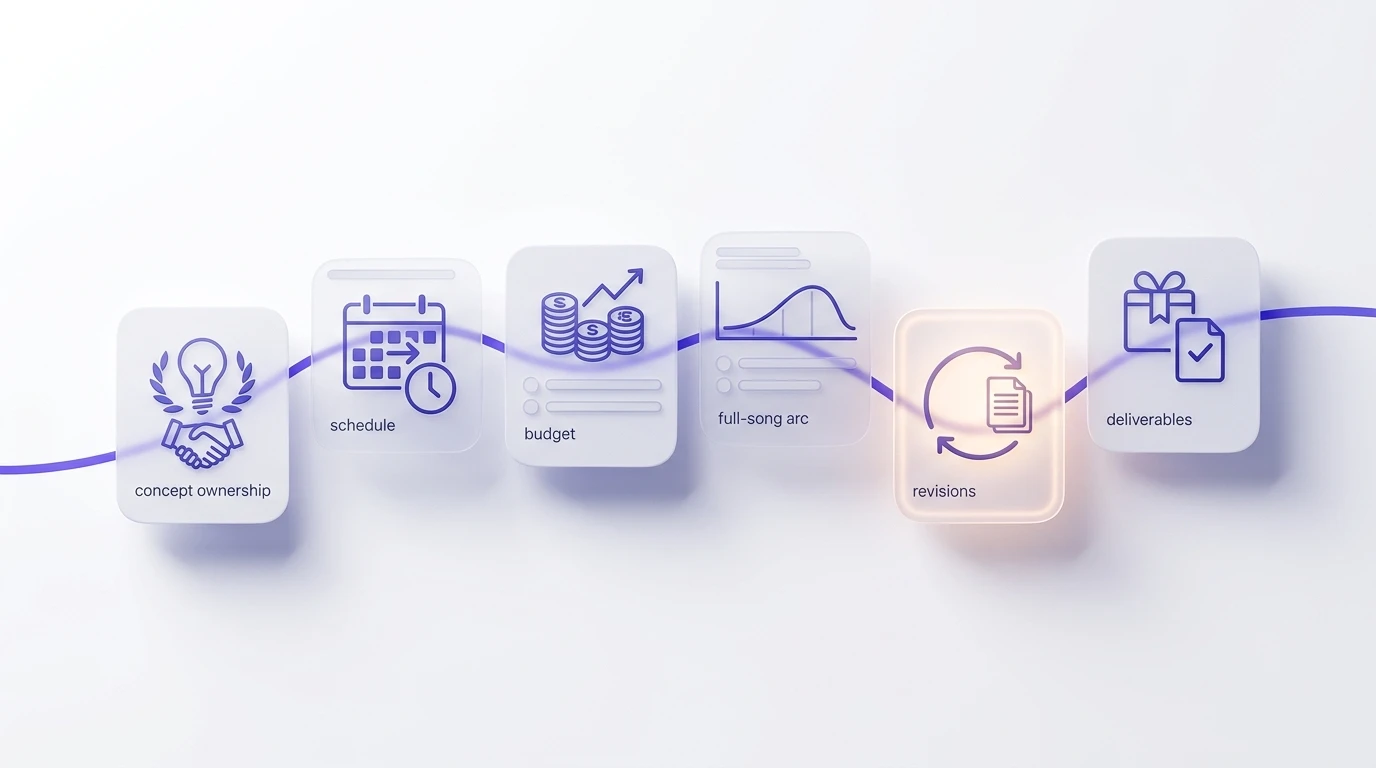
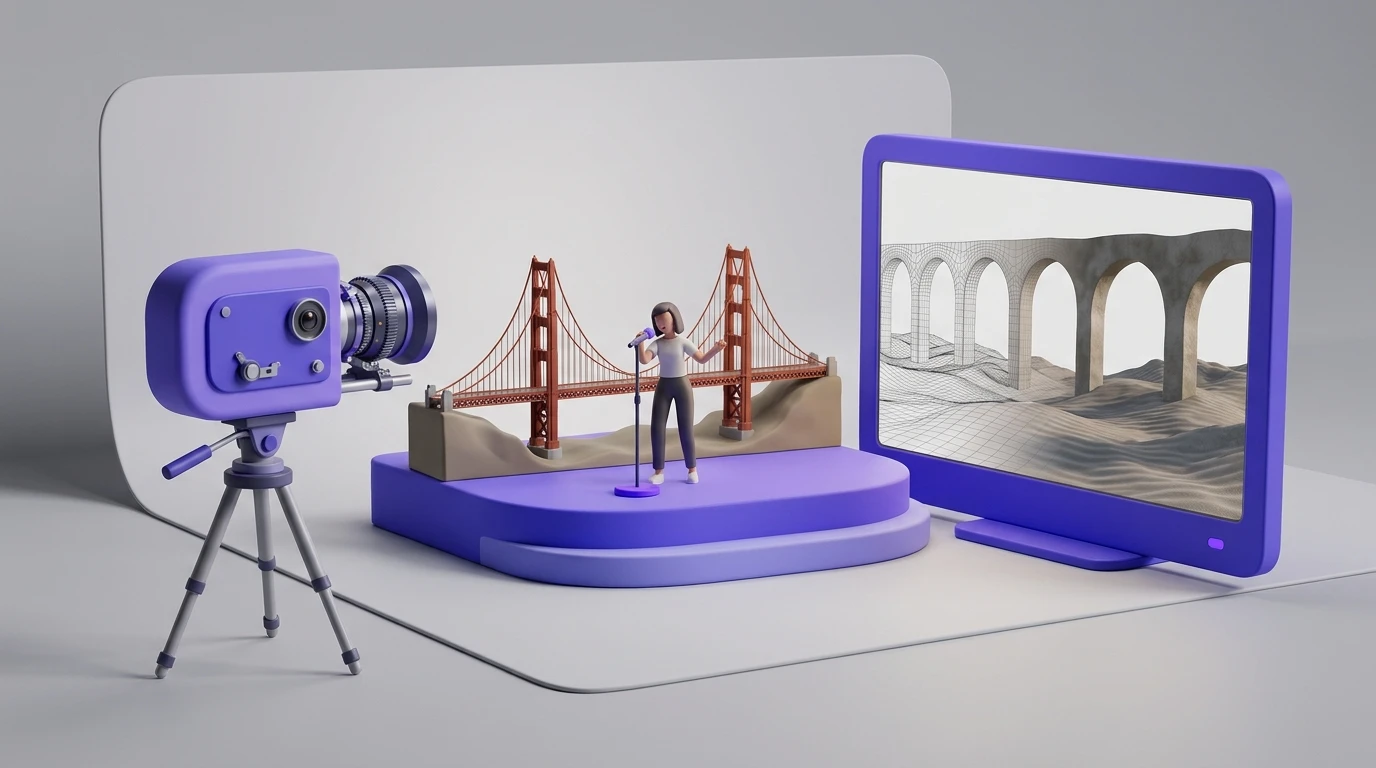
If you’re comparing “video production San Francisco Bay Area” options, choose a local crew for real performances and locations. Consider directed AI-assisted production for a finished single that needs a full-song visual world without a shoot. Judge both on full-length work and a written delivery scope.
- Choose the production method before choosing the company. A filmed performance needs different resources from an AI-assisted visual narrative.
- Ask for a complete video comparable to your project. A highlight reel cannot show whether the direction holds across a full song.
- Make the delivery date and file rights contract requirements. Compare quotes only after the scope matches.
How to choose video production in the San Francisco Bay Area
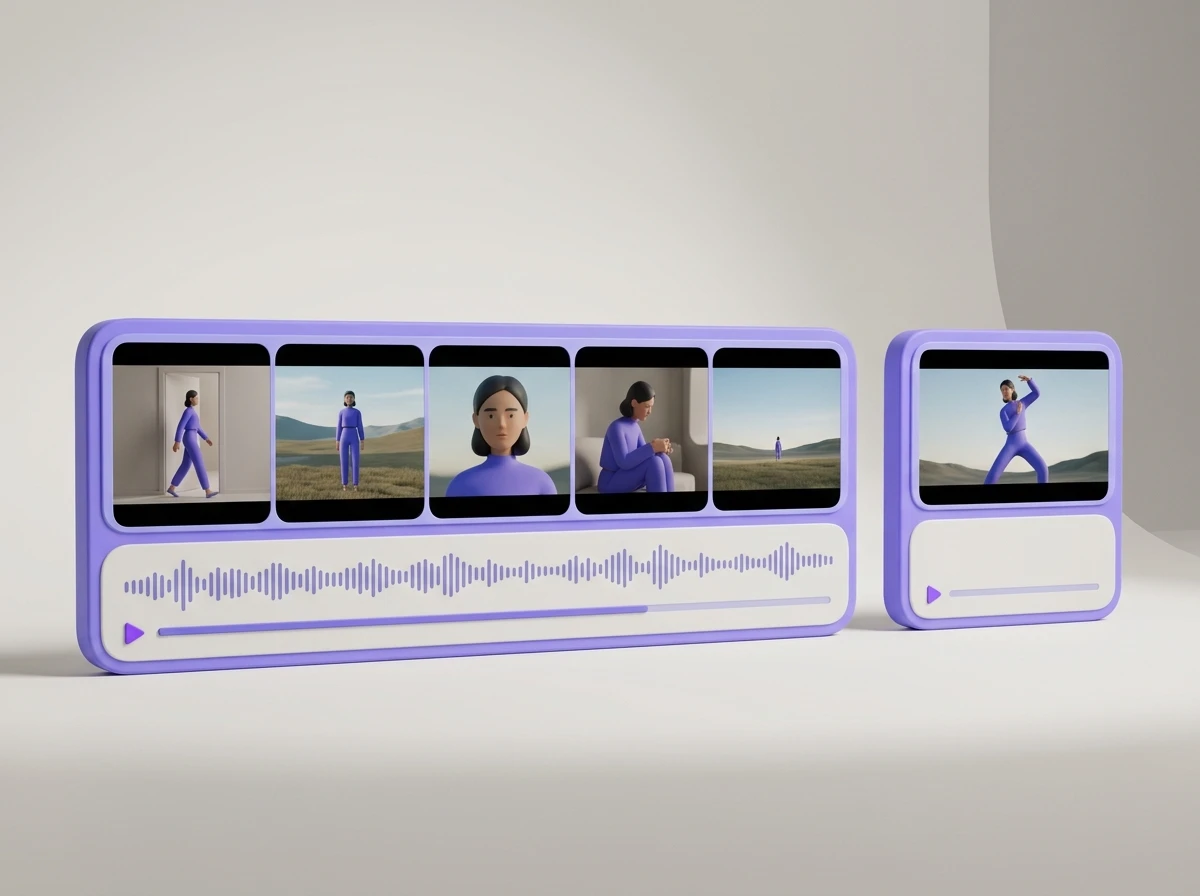
The first filter is what the camera must capture. If the video depends on your actual performance, a local crew belongs on the shortlist. If the concept lives in an imagined world, you can also consider production that does not require a location shoot.
Next, judge creative fit using complete work. For an artist release, watch how the visuals develop through a verse and chorus, then hold attention during the quieter passage. A striking opening says little about the rest of the song.
Treat the delivery deadline as a pass-or-fail requirement. Ask when the provider needs your finished audio and what approval starts the production clock. Our guide to how to choose a video production company explains the broader evaluation process, but the decisive evidence is a relevant finished project backed by a clear proposal.
A list of video production companies in San Francisco will include firms built for very different jobs. Corporate interview experience does not automatically establish music-video direction. Ask for the work that proves your particular fit.
Which production model fits your project?
Choose a production model by the work it needs to do. Local presence matters when someone must capture a performance or coordinate physical locations. It matters less when the project starts with supplied footage or generated visuals.
Use this matrix to screen the production approach before assessing individual providers. Strong means the task fits that model, varies means you need specific evidence, and weak means you should usually choose another route. These are editorial fit judgments, not ratings of individual companies.
| Requirement | Independent videographer | Full-service firm | Post-production studio | Directed AI-assisted production | Your option |
|---|---|---|---|---|---|
| Film real performers or locations | Strong | Strong | Weak | Weak | |
| Coordinate a complex physical shoot | Varies | Strong | Weak | Weak | |
| Direct a visual concept across a full song | Varies | Varies | Varies | Strong | |
| Finish footage you already have | Varies | Strong | Strong | Varies |
Copy the table and fill the last column with evidence from your shortlisted provider. A promise without a relevant work sample should remain “varies.”
Independent videographer: a contained local shoot
Choose an independent videographer when the concept is manageable with a small crew. A controlled performance in an available rehearsal room can fit this route, provided the proposal includes the lighting and editing the treatment requires.
Ask who handles post-production. Skip a solo arrangement when the plan depends on several locations or substantial on-set coordination unless the videographer has explicitly budgeted a supporting team.
Full-service production firm: a shoot with moving parts
A full-service video production firm suits projects that need coordinated production resources. For a narrative music video with performers and location changes, a producer can keep the physical production aligned with the treatment.
Check who owns the creative direction. Video production agencies may have impressive commercial work while offering little evidence of sustained music-led pacing. Choose another route if their process or proposed crew adds complexity your release does not need.
Post-production studio: footage already exists
Choose a post-production studio when the missing piece is the edit. An artist with usable performance footage may need a stronger structure and a consistent color treatment rather than another shoot.
Ask the editor to review representative source files before quoting. Missing coverage cannot always be repaired in post, and a polished grade will not supply a performance angle that was never filmed.
Directed AI-assisted production: a finished single without a location shoot
Our AI music video service for artists, SongTrailer, puts one creative director in charge from concept through final edit, with a $3,500 flat package delivering a full-song master and social-ratio adaptation in about 5–7 business days after intake and direction lock.
This route suits an artist whose song needs a cinematic visual world without organizing a physical shoot. Choose filmed production when documenting your actual performance or a specific real place is central to the concept.
Ask for a quote you can actually compare
Compare proposals against the same finished deliverables. A quote for camera coverage and a basic edit cannot be weighed fairly against a proposal that includes concept development and platform-specific finishing.
For a full-song release, specify whether the social deliverable is a reframed version of the complete video or a shorter cut. Those are different editing jobs. The workflow in music videography from treatment to final master helps separate creative approvals from finishing work, so each responsibility can appear in the proposal.
Send each shortlisted provider the same brief:
Project: [Artist and release title]
Finished audio: [File link and exact runtime]
Release date: [Date]
Upload-ready master needed by: [Date]

Creative direction: [Mood and central visual idea]
Must appear on camera: [Performers or locations, or none]
Existing assets: [Footage, artwork, logos, references]

Primary deliverable: [Full-song master and intended platform]
Social deliverable: [Aspect ratio, full-song adaptation or shorter cut]
Other required files: [Captions, textless version, or none]

Budget ceiling: [Amount and currency]
Approver: [Person responsible for consolidated feedback]

Please specify:
Included production and post-production work
Assumptions, exclusions, and additional charges
Approval stages and included refinement rounds
Schedule start conditions and delivery date
Usage rights and third-party license restrictions
Whether source footage or editable project files are included
Ask who carries location fees and other shoot expenses. For AI-assisted work, ask what happens when a requested visual change alters the approved direction. A flat price is useful only when its boundaries are clear.
Make the release date a production constraint
A production timeline needs a defined starting event. “After approval” is too vague unless the proposal identifies what you are approving and which materials must already be supplied.
Work backward from the upload-ready master deadline. Leave room to inspect the export before release, then agree on the first-cut date and feedback windows. Name one approver who can consolidate comments from the artist and label.
Lock the treatment before detailed production begins. If the approved concept is an empty city at night, replacing it with a daylight performance changes the work substantially. Ask the provider to distinguish a refinement from a change of direction before the schedule depends on that distinction.
For visual continuity, approve a look reference as well as the written concept. Check recurring character appearance and the lighting logic between scenes. A convincing still frame does not establish that the world will hold across the song.
Confirm the master specifications and delivery rights
“Platform-ready” should describe an agreed export, not a vague promise. YouTube identifies 16:9 as its standard aspect ratio for computer playback in its recommended upload encoding settings, while noting that its player adapts to other ratios.
Ask how the social version will be composed. A centered crop can remove a performer’s hands or cut essential text out of frame. Review important shots in the intended ratio before final delivery.
Confirm what you can do with the delivered files, including paid promotion. Also ask about restrictions attached to any stock assets or other third-party material.
Do not assume payment settles copyright ownership. The U.S. Copyright Office explains in its work-made-for-hire guidance that commissioned work qualifies only under specific conditions. Put ownership or licensing terms in writing, and distinguish the delivered masters from source footage and editable project files.
Frequently Asked Questions
How much should a three-minute video cost?
Runtime alone cannot establish a reliable production price. A contained performance edit and a location-heavy narrative can have the same length but require very different work, so request a scoped quote rather than a price per finished minute.
Can I film a music video on a San Francisco street?
You may need permits or other approvals, depending on the location and filming setup. Have the producer confirm the responsible authority and any insurance requirements before committing to the location.
Can video production begin before the song is finished?
Concept development can begin before the final audio is ready. Lock the release version before timing the edit, because changes to the arrangement can invalidate transitions and visual cues.
If your shortlist points to a directed, AI-assisted full-song video, get in touch with your finished track and release date. Attach the delivery brief so the conversation starts with the master you need.