
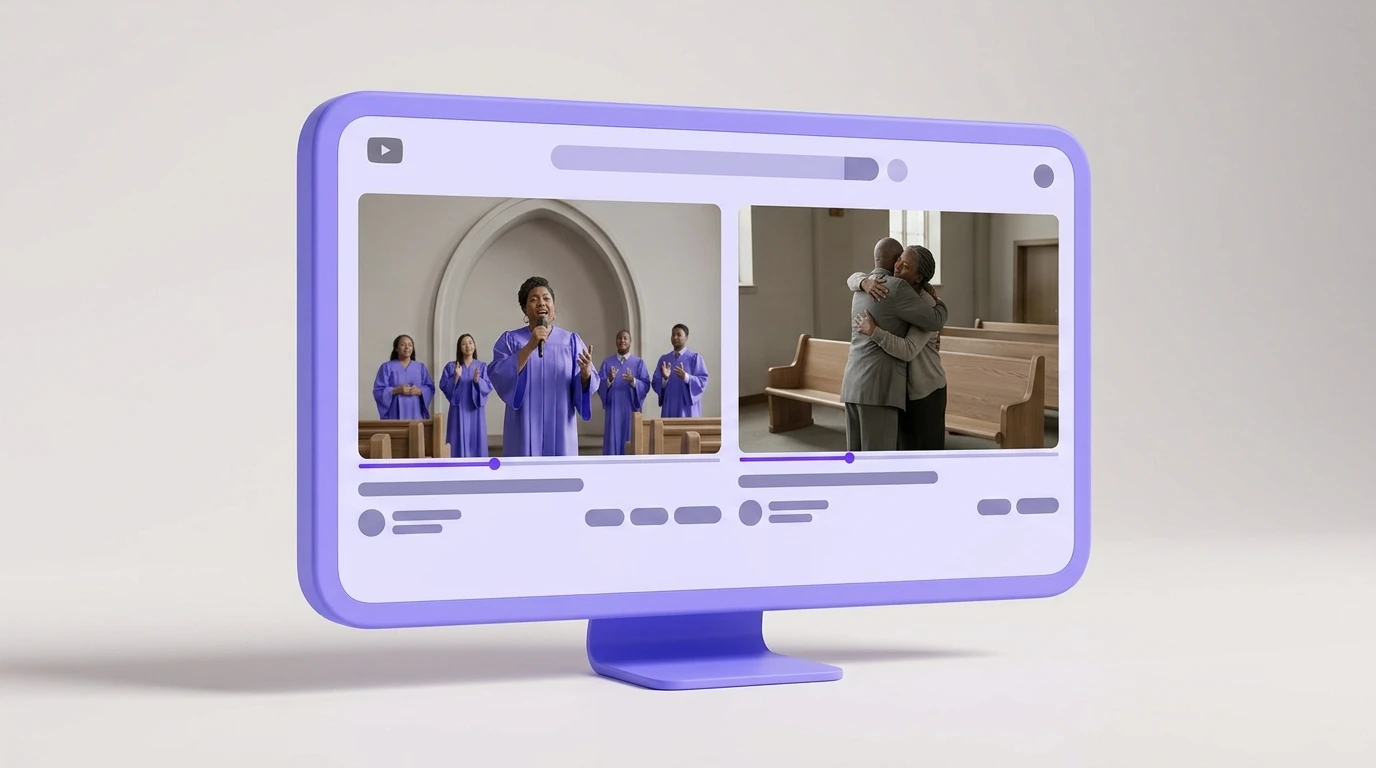
If you’re searching “YouTube music videos gospel,” start with official artist channels and choose a format that fits how you want to listen. CeCe Winans’ official channel includes “Goodness of God.” Use this guide to find full performances, compare visual storytelling, and build useful references for your own release.
- Search by artist and song title, then check the uploading channel. A title containing “official” is not proof that the artist published it.
- Watch through the final chorus before saving a reference. The opening alone cannot show whether the visuals support the whole arrangement.
- For your own release, describe what a reference achieves emotionally rather than asking someone to copy its shots.
Where to Find Gospel Music Videos on YouTube
Official artist channels are the strongest starting point when you want a specific recording and its intended visuals. Broader gospel searches help with discovery, but they also mix audio tracks with video uploads.
Start with a song you know. Search for the performer and title, adding official video for a released music video or live for a performance. Open the channel behind the upload and check whether its other releases belong to the same artist.
For wider discovery, YouTube Music’s gospel search includes Marvin Sapp’s “The Best in Me” and VaShawn Mitchell’s “Nobody Greater.” Check the result type before pressing play. A song listing may provide audio without a filmed performance.
Be specific about style, too. Black gospel, Southern gospel, and contemporary worship can lead to different listening experiences. For Southern gospel, adding a quartet or artist name helps narrow a broad search. The label Christian music videos covers a wider field and may return styles well outside the gospel sound you wanted.
An extended praise-and-worship playlist can suit continuous listening. If you want to study direction or editing, choose individual videos instead: you need to see where one performance begins and ends.
How Performance and Storytelling Serve the Song
Performance puts the singer’s delivery at the center. Storytelling gives the lyric a visible situation or progression. Either approach can carry a gospel song. The right choice depends on where its emotional weight sits.
A close shot can hold attention when a singer’s expression changes with a line. A narrative can help when the lyric describes a specific struggle or reconciliation. Adding a dramatic plot to every song can make the meaning harder to follow.
| Approach | What carries the emotion | What to watch for |
|---|---|---|
| Live performance | Vocal delivery and the relationship with the room | Whether audience and choir shots arrive at meaningful musical moments |
| Staged performance | The artist’s presence in a controlled setting | Whether framing and lighting develop as the arrangement grows |
| Narrative video | Characters and events connected to the lyric | Whether the story clarifies the song without competing with it |
| Performance with narrative scenes | Movement between the singer and a parallel story | Whether each return to the artist feels motivated |
I favor performance when the vocal already carries a complete emotional arc. Give the face room. A long, steady shot can serve a vulnerable line better than several impressive locations.
For storytelling, check the implied events against the words. A song about trust does not automatically require a hospital scene or a staged miracle. Let the artist’s intended meaning set the boundaries, especially when imagery could suggest a personal testimony that never happened.
Watch “Goodness of God” with that distinction in mind. Notice when your attention goes to the voice, then examine what the image does at that moment. That exercise produces a more useful reference than simply calling a video “cinematic.”
Build a Reference Playlist You Can Actually Use
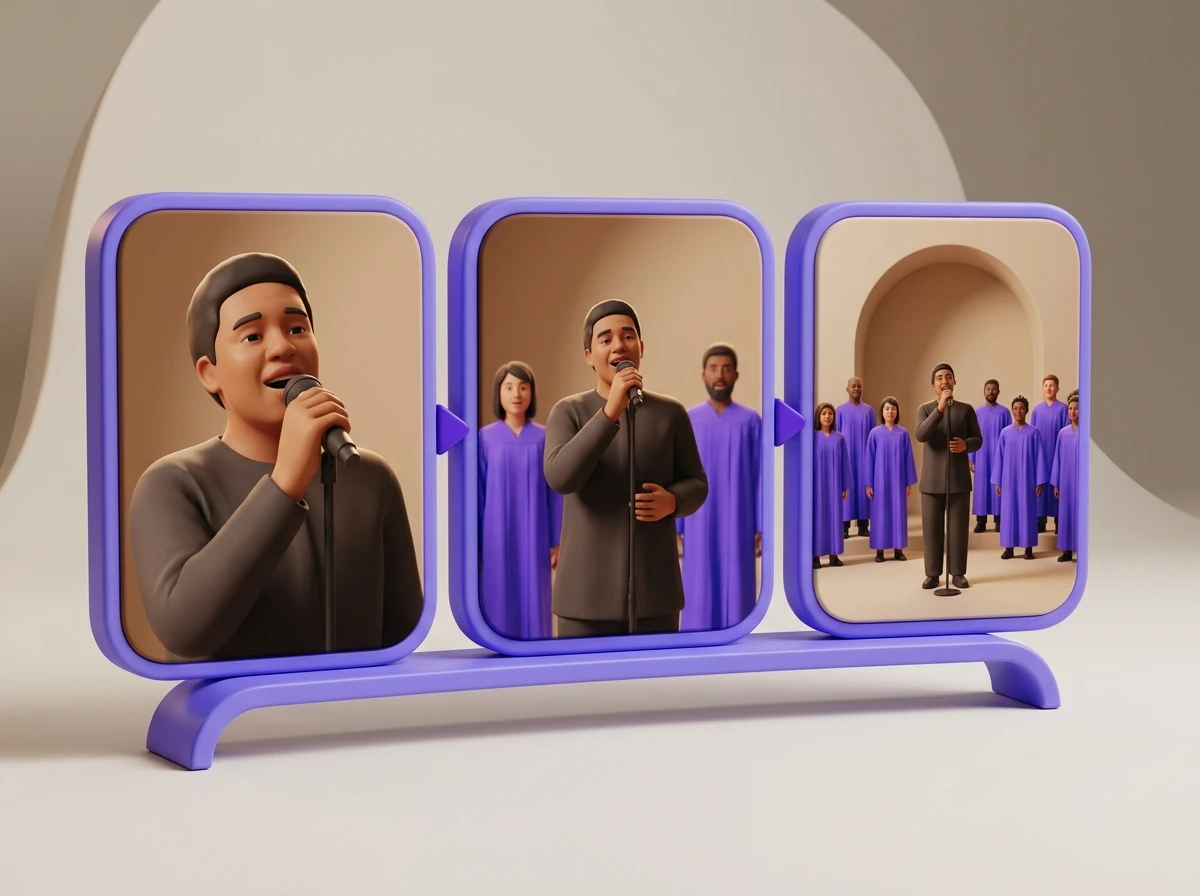
A useful reference playlist records why a video belongs there. Without that note, saved videos become a collection of moods that are difficult to translate into decisions.
Follow this sequence when choosing references:
- Find the specific recording. Search for the artist and song, then open the original channel where possible.
- Watch the full video without taking notes. Decide whether the whole piece holds your attention.
- Watch again at the musical changes. Note what happens when the chorus enters or the arrangement becomes quieter.
- Save the video with a clear purpose. Record the moment you want to study and what it contributes to the song.
Skip references that only have a striking opening. A full-song release needs visual direction through repeated choruses and instrumental passages, where an attractive concept can start to run out of ideas.
Say your finished single begins with a quiet testimony and grows into a choir-led final chorus. A useful reference note would look like this:
Song section: Quiet opening verse into a choir-led final chorus
Reference moment: A restrained performance that opens into a wider view
What to borrow: The gradual increase in visual scale
What to avoid: Copying the location, costume, or shot sequence
Our direction: Keep the opening intimate; reveal the wider setting as the choir enters
Continuity rule: Keep the same setting and wardrobe throughout
Use this blank version beside each saved reference:
Song section:
Reference title and URL:
Reference timestamp:
What the image contributes:
What to borrow:
What to avoid:
Our direction:
Continuity rule:
The distinction between what to borrow and what to avoid matters. “Make it look like this” leaves too much unresolved. “Let the frame widen as the song becomes communal” gives a director a decision they can develop.
Turn Gospel References Into a Full-Song Plan
A full-song plan assigns a visual purpose to each part of the arrangement. It also defines what stays consistent, so the video feels like one world rather than unrelated scenes.
Start with the finished audio. Mark the section changes and write a brief visual action beside each one. Our guide to music videography from treatment to final master explains how that direction moves into production and delivery; the immediate task is to make the song’s progression visible on paper.
For the quiet-verse, choir-led-chorus example, a workable plan is:
| Song section | Visual direction | Continuity check |
|---|---|---|
| Opening verse | Close framing with limited movement | Establish the artist’s wardrobe and setting |
| Chorus | Reveal more of the surrounding space | Keep the same light direction and color palette |
| Reflective bridge | Return to a restrained composition | Preserve the established setting |
| Final chorus | Use the widest framing and strongest movement | Make the expansion feel earned by the music |
Repetition needs development, not constant replacement. A returning chorus can revisit an earlier composition with a changed expression or wider frame. That connection often feels stronger than introducing another unrelated location.
Plan the social version before approving compositions. A landscape shot with the singer at the edge may lose its subject when cropped vertically. Keep essential action within a usable crop, or plan a separate composition for that moment.
If the release date is approaching, settle the concept before production begins. Our guidance on choosing a video production company helps frame the supplier decision; ask specifically about full-song coverage and the review schedule. Confirm delivery formats before committing, so a short teaser does not become a substitute for the finished video you need.
Frequently Asked Questions
Can I watch gospel music videos on YouTube for free? Many public gospel videos are available without a paid subscription, although ads and regional restrictions may apply. Watching an available public upload does not require buying the song.
Can I include a gospel music video in a church livestream? Only if you have the necessary permissions or a license covering that use. YouTube’s copyright guidance explains permission and licensing options; a video being publicly watchable does not grant permission to rebroadcast it.
Are view counts a good way to choose gospel music videos? View counts indicate reach, but they do not tell you whether a video suits your listening purpose or creative brief. For references, judge how well the imagery supports the particular song.
A quiet verse and a choir-led final chorus give you a clear visual arc to plan. Save a reference that earns that lift, then describe the change you want at the chorus. If your finished single needs a full-song master and social-ratio adaptation, get in touch with SongTrailer for human-directed, AI-assisted production built around that direction.