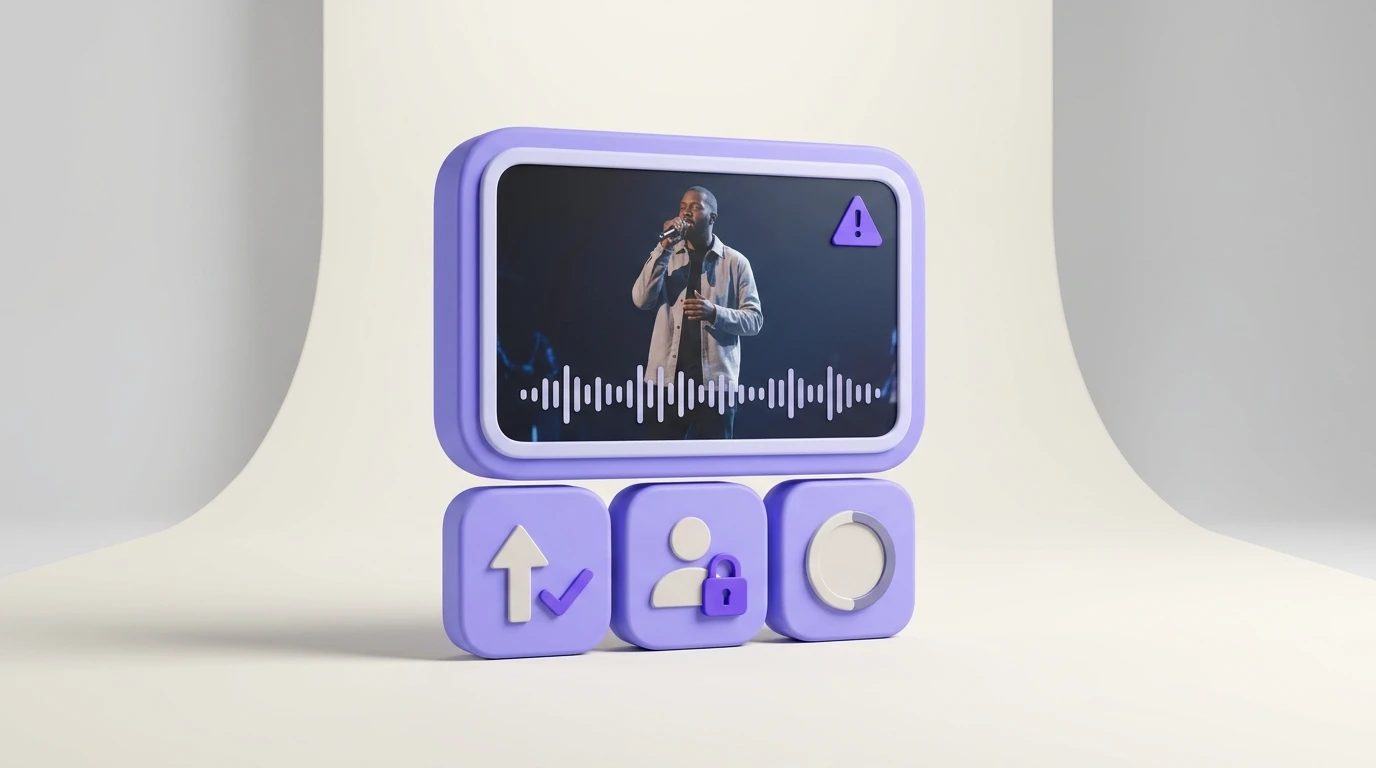
Explicit music videos can contain strong language, nudity, sexual content, or graphic violence. A warning label alone does not decide where they can run. YouTube can age-restrict otherwise permitted videos. Treat the song’s advisory label, the visual edit, and each destination’s release rules as separate decisions before scheduling a release.
- Separate audio from visuals. Removing profanity does not make explicit imagery suitable for a general audience.
- Check distribution and advertising separately. A video allowed on a platform may still face age restrictions or limited monetization.
- Approve alternate shots before the final edit. Build the full-song and social versions around those replacements instead of relying on last-minute blurring.
What makes explicit music videos “explicit”?
“Explicit” describes mature content, but it is not a single rating system shared by every music platform. A track’s advisory label, an informal NSFW warning, and a platform’s age restriction serve different purposes.
The Recording Industry Association of America’s Parental Advisory Label program identifies recordings containing explicit content. That label is not an upload approval or a universal video age rating.
| Label or status | What it tells the audience | What it does not establish |
|---|---|---|
| Explicit or Parental Advisory | The recording contains content that warrants parental notice | Whether every visual scene meets a platform’s rules |
| NSFW | The uploader or publisher considers the material unsuitable for workplace viewing | A standardized age classification |
| Age-restricted | The platform limits who can access the upload | Permission to use the same creative in advertising |
| Removed for a policy violation | The platform has disallowed the upload under its rules | That adding a warning will make it acceptable |
Audio and visuals need separate reviews. A fully clothed performance can carry explicit lyrics. A clean recording can accompany imagery that triggers restrictions.
Searches for NSFW music videos often mix those categories together. For a release team, the useful question is more precise: which element creates the restriction, and which version does the destination need?
How do platform rules affect a release?
Platform permission, audience access, and monetization are separate decisions. Plan for each one before committing the public release date.
YouTube’s nudity and sexual content policy prohibits sexual content intended for sexual gratification. Artistic context can affect how content is assessed, but calling something a music video does not create an automatic exemption.
A permitted upload may still be age-restricted. YouTube says age-restricted videos are unavailable to signed-out viewers and people under 18, which can reduce access even when the upload remains online.
Advertising creates another test. YouTube’s advertiser-friendly content guidelines assess subjects including profanity, sexual content, and violence when determining ad suitability. Permission to publish does not guarantee full monetization. Paid campaigns also have their own creative rules, so an approved organic upload is not proof that an ad will pass review.
For an artist with an approaching release date, this changes the production plan. A restricted version may fit an adult audience, while the public campaign needs an alternate cut that preserves the mood without the same explicit material.
A content warning helps viewers make a choice. It does not override platform policy.
Which edits should you deliver?
Choose versions by destination and purpose. “Clean edit” is too vague for a production brief because it can mean altered lyrics, altered pictures, or both.
| Deliverable | Audio decision | Visual decision | Main purpose |
|---|---|---|---|
| Original full-song master | Retain the approved original recording | Retain the approved treatment, subject to destination rules | Present the intended artistic version |
| General-audience full-song cut | Specify original or clean audio | Replace material unsuitable for the intended audience | Support a broader public release |
| Social-ratio adaptation | Choose audio for the specific placement | Reframe and, where necessary, replace shots | Fit the destination’s format and content requirements |
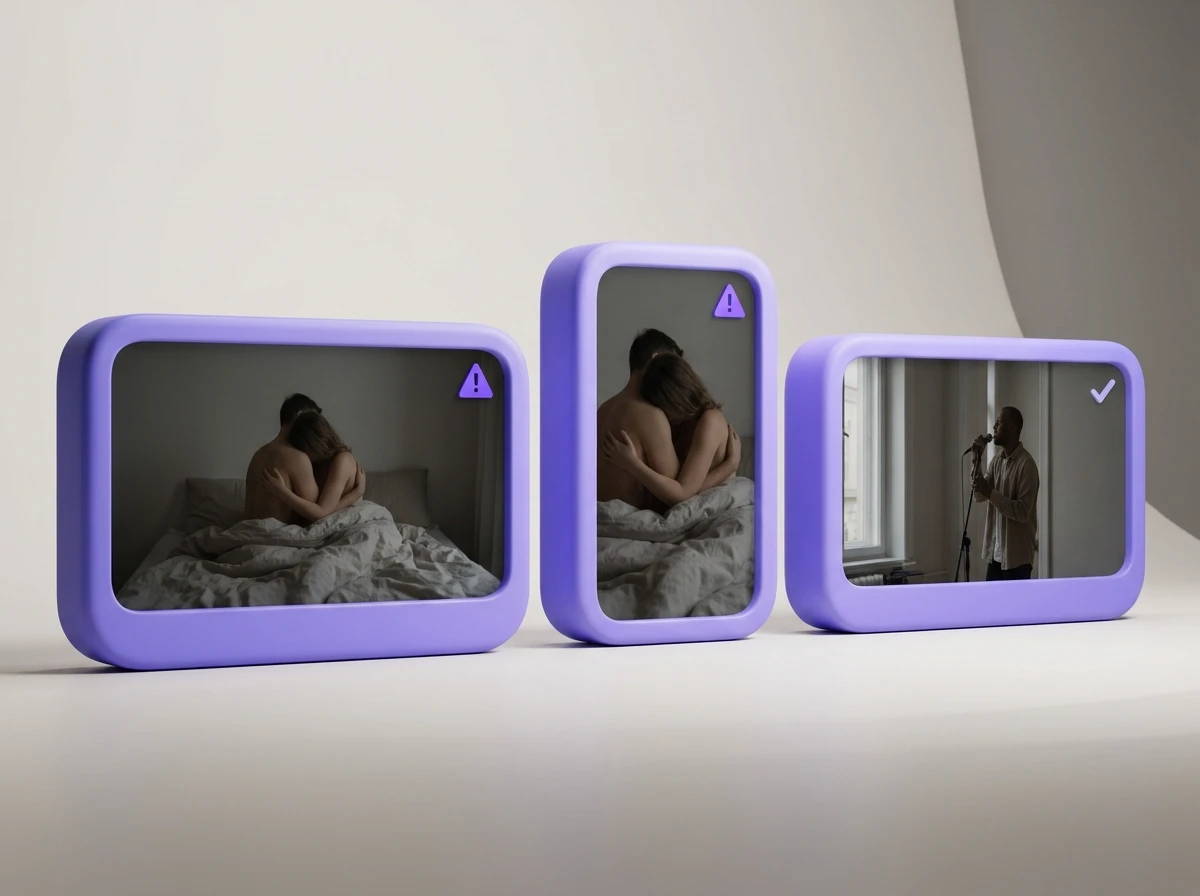
A social crop is not a compliance edit. Moving a frame into a vertical ratio does not change what the scene depicts. Blurring or cropping may also leave the underlying sexual act or graphic event obvious.
Replacement footage is usually the stronger creative choice. A fully clothed performance against a window can preserve intimacy through lighting and camera distance without depending on a censored image.
Protect the full-song experience, too. A short promotional cut cannot substitute for a complete master when the release strategy depends on listeners hearing the finished track from opening to final decay.
When comparing music video production companies for full-song releases, ask which alternate versions are included and which require additional editing. Put replacement scenes, ratio adaptations, and refinement rounds into the scope before work begins. That prevents “one small change” from becoming an uncertain production bill.
How do you prepare a release-ready version set?
A version plan connects every sensitive moment to an approved treatment for each destination. It belongs in the brief before the final edit is locked.
Use this sequence:
- Choose destinations and usage. Identify the full-song host and social placements. State whether each upload is organic content, monetized content, or paid advertising.
- Mark the sensitive moments. Add timecodes for explicit lyrics and visual concerns. Describe what appears on screen rather than writing a vague note such as “adult section.”
- Approve replacements and permissions. Choose alternate shots before rendering, and confirm the necessary rights and performer consent. If AI-assisted visuals use someone’s likeness, address that permission explicitly.
- Lock the version scope. Confirm the audio recording, full-song duration, aspect ratio, and review allowance for each deliverable. Keep these decisions with the music videography workflow from treatment to final master so an approved replacement survives every export.
- Review the actual uploads before publication. Watch each version in its destination player and inspect its thumbnail and metadata. Private or unlisted status does not exempt an upload from platform rules, and initial checks do not guarantee future approval.
Worked example: an intimate scene without nudity
Say a finished single contains strong language, and its treatment includes a nude bedroom scene. The artist wants a broadly accessible full-song upload and a separate social version.
I would approve a fully clothed window-side performance before the edit is locked. Keep the scene’s low light and restrained movement. Let the track carry the intensity.
The completed version brief could read:
Project: Finished single with explicit lyrics
Destinations: YouTube full-song upload and organic social posts
Original audio: Retain for the full-song candidate
Clean audio: Use for the social candidate
Flagged visual: Nude bedroom scene during the chorus
Approved replacement: Fully clothed performance beside a window
Deliverables: Full-song master and destination-specific social adaptation
Release gate: Review each upload against current destination rules
The clean audio remains a separate decision from the replacement scene. Neither version is guaranteed approval, but the team has a defined alternative instead of an emergency reconstruction.
Copy this blank brief for your release:
Project:
Destinations and organic or paid usage:
Original audio:
Clean audio:
Flagged visual and timecode:
Approved replacement:
Deliverables and aspect ratios:
Release gate and approval owner:
Frequently Asked Questions
Where can I watch official uncensored music videos?
Start with the artist’s or label’s official channels and the viewing links they publish. Availability can depend on your location, account status, and age. An “uncensored” playlist title does not establish that an upload is authorized or complete.
Can a thumbnail cause problems when the video itself is acceptable?
Yes. Platforms apply rules to thumbnails as well as the video, so choose the cover frame deliberately. Avoid using a sexually explicit or graphic image to promote an otherwise compliant edit.
Does an explicit label protect a video from copyright claims?
No. An advisory label describes content and gives no permission to use a recording, composition, or visual asset. Secure the relevant rights separately, including permission for third-party footage.
Do the same restrictions apply to AI-generated explicit scenes?
Yes. YouTube’s sexual content policy covers illustrated and animated content, so synthetic visuals are not a workaround. Review what the finished scene depicts rather than assuming the production method makes it acceptable.
For the bedroom-scene example, approve the clothed replacement before fixing the public release date. If your finished track needs a destination-compatible treatment, SongTrailer combines human direction with AI-assisted visuals for a full-song master and social-ratio adaptation. Get in touch about your release brief with the intended destinations and version requirements already defined.