Michael Jackson music videos built cinematic worlds by giving each song a setting with clear visual rules, then using choreography to change what happens inside it. John Landis’s “Thriller” turns a date into a horror story. “Bad” turns a confrontation into a dance battle. The lesson is coherence before spectacle.
- Watch “Billie Jean” for a visual rule that makes an ordinary action memorable: Jackson’s footsteps illuminate the pavement.
- In “Beat It” and “Bad,” follow how choreography changes a confrontation. The dancing carries the story.
- For your own release, choose a repeatable visual rule and decide how it develops across the full song before adding more locations.
Michael Jackson Music Videos: A World-Building Watchlist
Start with the films below. Each gives its song a distinct screen identity, whether through a recurring effect or a setting where movement changes the balance of power.
These are useful studies within the broader conversation about the greatest music videos of all time, because their directing choices remain readable beyond their original release era.
| Film | The world it creates | What to watch closely |
|---|---|---|
| “Billie Jean” | A nocturnal city where Jackson’s presence changes his surroundings | How illuminated pavement gives walking a signature |
| “Beat It” | Rival groups moving toward a violent confrontation | How the final group dance changes the meaning of the gathering |
| “Thriller” | A date repeatedly overtaken by horror | How revelations change what the audience believes is real |
| “Bad” | A tense homecoming that becomes a subway showdown | How dialogue establishes stakes before choreography takes over |
| “Smooth Criminal” | A stylized nightclub built around danger and precision | How costume silhouettes and group formations make movement legible |
| “Remember the Time” | An Egyptian royal court disrupted by a mysterious performer | How a performance becomes a story of attraction and pursuit |
| “Black or White” | A succession of global and constructed settings | How transitions and face-morphing connect otherwise separate scenes |
The settings vary sharply. The underlying discipline holds: the audience can understand what makes each world different.
Give the World a Rule the Audience Can Recognize
A cinematic world needs a pattern the viewer can read. “Billie Jean” makes that pattern immediate: Jackson steps, and the pavement responds.
The illuminated pavement in “Billie Jean” gives a simple walking performance a distinctive physical consequence. Once the audience understands the device, another step carries anticipation. The director has made ordinary movement worth watching.
That is useful for an artist whose finished track needs visuals but whose budget cannot support an elaborate shoot. Studying practical effects in 80s music videos helps separate the appeal of a visual device from the expense of a large set. A controlled lighting change can give a modest location its own identity.
“Thriller” uses a different kind of rule. Familiar horror cues establish danger, then revelations change the apparent reality of the scene. The movie-theater reveal matters because it changes how the audience reads everything that preceded it.
A world can change radically if the change has a clear dramatic purpose. In “Thriller,” transformation raises uncertainty about the person standing beside you.
“Black or White” shows how this works across multiple settings. Its face-morphing sequence makes transformation itself the connecting device. Continuity comes from a shared idea, even when the backgrounds and people change.
Make Choreography Change the Story
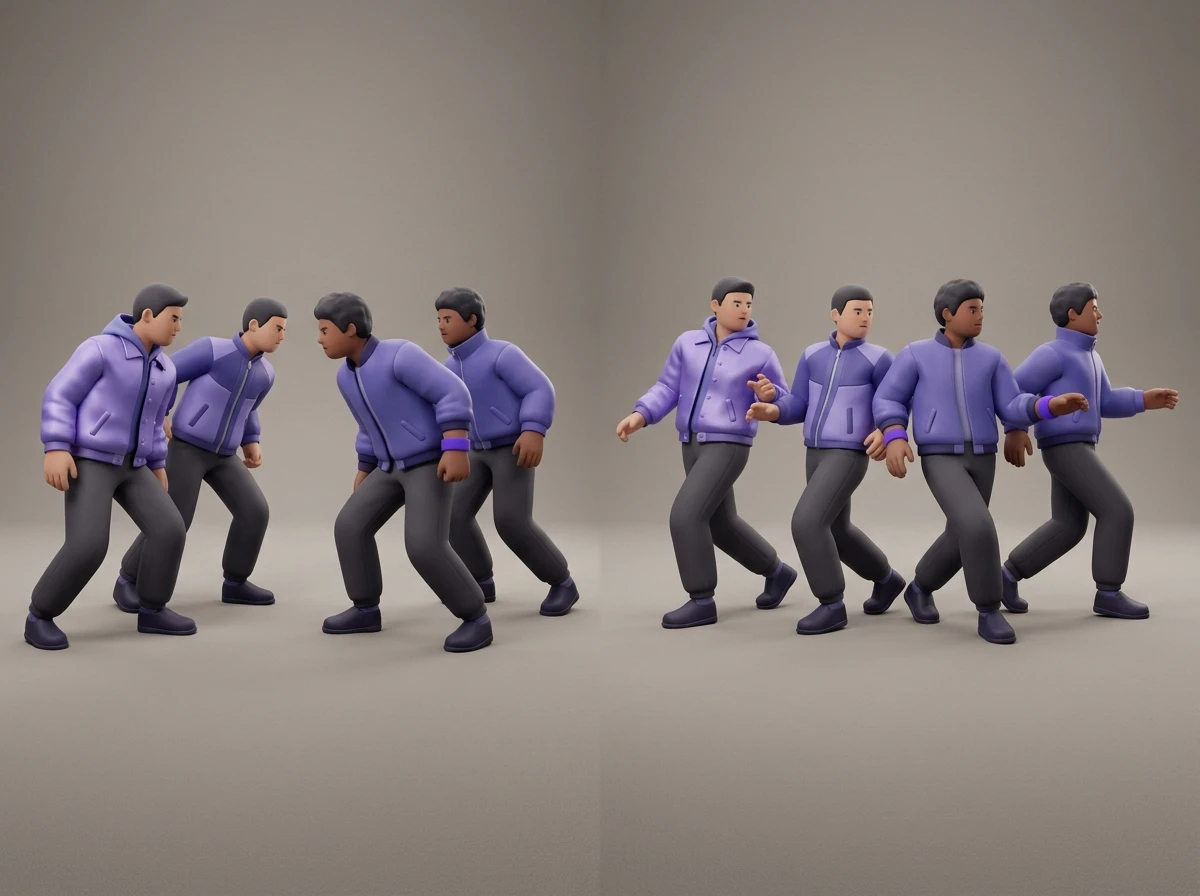
Choreography becomes storytelling when movement changes a relationship or resolves a conflict. “Beat It” makes that visible by turning an impending fight into a shared routine.
Watch the group behavior. Bodies that were organized around opposition begin moving together. The final dance gives the song’s rejection of violence a physical form.
Martin Scorsese’s “Bad” gives the movement a different job. The dramatic opening establishes pressure around Jackson’s character and his standing among his peers. When the subway performance begins, the confrontation already has meaning, so each advance and formation carries an argument about authority.
“Smooth Criminal” relies on controlled tension. The nightclub setting gives the performers fixed objects and clear spatial relationships to work against. Wider compositions let the audience read Jackson’s silhouette and the ensemble’s timing.
Keep the setup and completion of an important move visible. Cutting away during the action can hide the skill that makes the shot compelling, especially when the audience needs to understand how performers relate to each other.
“Remember the Time” embeds the performance inside a courtship and pursuit. The court provides an audience within the film, so reactions become part of the drama. Jackson’s movement affects what other characters do next.
“Scream” offers a contrasting setting for Michael and Janet’s precision: a stark spacecraft, with more on their shared performance language in our guide to Janet Jackson’s music videos.
Turn a Reference Into a Full-Song Treatment
A treatment is a written plan for how the video looks and develops. The useful part of a Jackson reference is a directing mechanism you can adapt to your song, such as a repeated action that changes the environment.
We recommend writing the world rule before choosing individual shots. That gives every new scene something to obey, which becomes especially valuable when AI-assisted visuals risk changing the location or the artist’s appearance between shots.
Say your finished single is about leaving a relationship. Borrow the cause-and-effect principle from “Billie Jean” and build an original setting: an empty rehearsal room where a doorway glows only during the chorus.
Open with the singer far from the dark doorway. During the opening chorus, the light appears and the singer approaches it. The next verse returns to darkness, but the singer remains closer. The same room now carries evidence of progress.
Hold on the singer during the bridge. When the final chorus arrives, the doorway lights again and the singer walks through. End on the empty room. The final image resolves an action that began earlier in the song.
This approach gives a full-song video somewhere to go. A striking teaser can survive on an isolated image, while a complete track needs development.
Use this template to build your own version:
Song:
Emotional conflict:

Reference film:
Directing mechanism to borrow:

Original setting:
World rule:

Opening image:
Verse action:
Chorus change:
Later verse development:
Bridge shift:
Final chorus payoff:
Closing image:

Continuity locks:
Essential performance shots:
Social-ratio framing needs:
Keep the continuity locks specific. “Cinematic” gives an editor little to check. “Same dark jacket throughout, doorway always behind the singer, warm light only during choruses” creates usable boundaries.
For social-ratio adaptation, plan a portrait-safe composition before production. In the rehearsal-room example, a face on one edge and the doorway on the opposite edge could make the relationship disappear in a tighter crop. Reframe the action or prepare an alternate composition that preserves both.
A fixed release date makes these decisions more urgent. Lock the ending before generating or shooting extra scenes, then use the treatment-to-final-master production workflow to organize the work around a complete edit. Unresolved direction consumes time that should go toward refinement.
Frequently Asked Questions
Where can I watch Michael Jackson music videos for free?
Michael Jackson’s official YouTube releases are available through the Michael Jackson and michaeljacksonVEVO channels, subject to regional availability. The official video links above provide starting points without relying on fan reuploads.
Did Michael Jackson invent music videos?
No. Promotional music films existed before his solo breakthroughs, including films made for the Beatles and Queen. Jackson helped expand the form’s cinematic ambition and made choreography central to its storytelling.
Can I use footage from Michael Jackson’s videos in my own music video?
For a release video, arrange permission for copyrighted footage you intend to reuse unless a legal exception applies. The U.S. Copyright Office’s fair-use guidance describes a case-by-case assessment, so a short clip is not automatically cleared for use.
The rehearsal-room idea has a clear test: does the final doorway shot feel earned by everything before it? For a finished single, SongTrailer combines human direction with AI-assisted visuals to deliver a full-song master and a social-ratio adaptation. Get in touch about your full-song video with the world rule and ending you want to build toward.