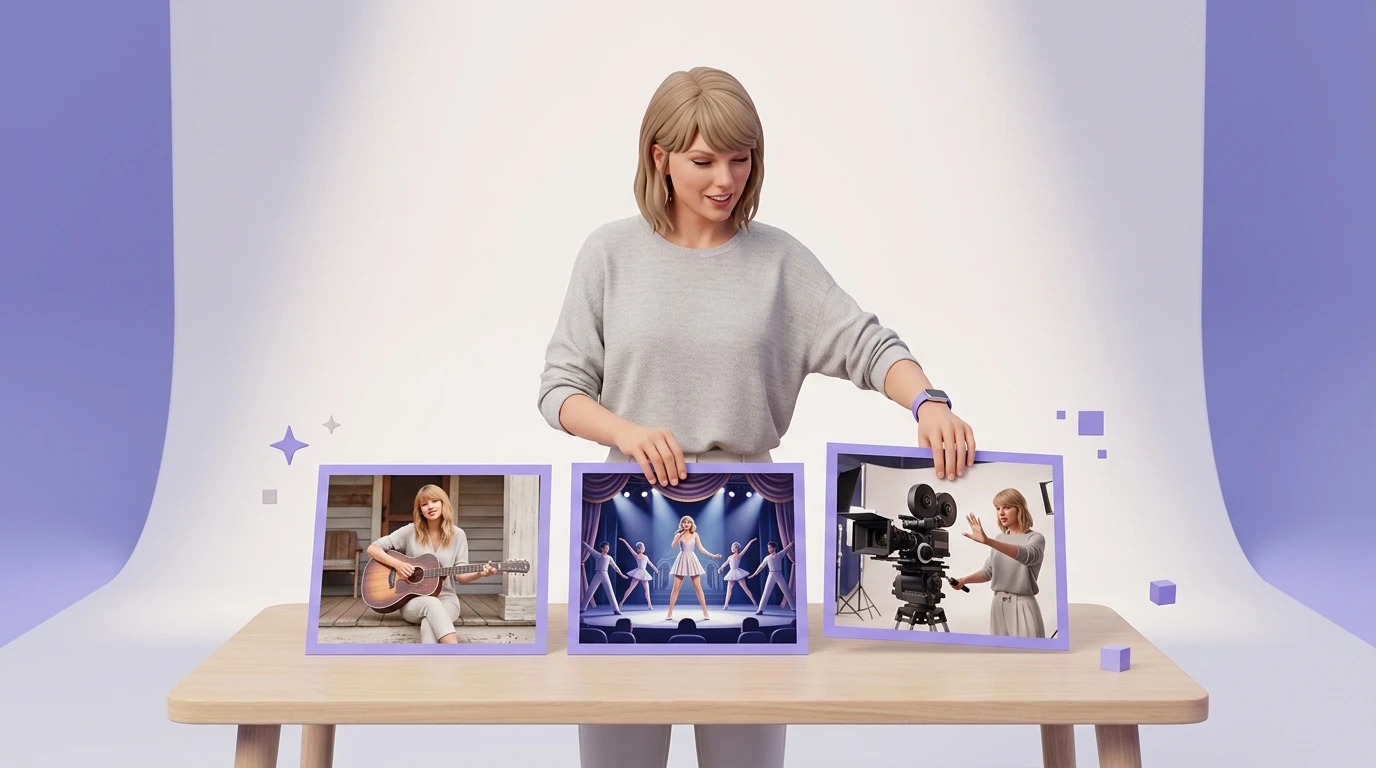
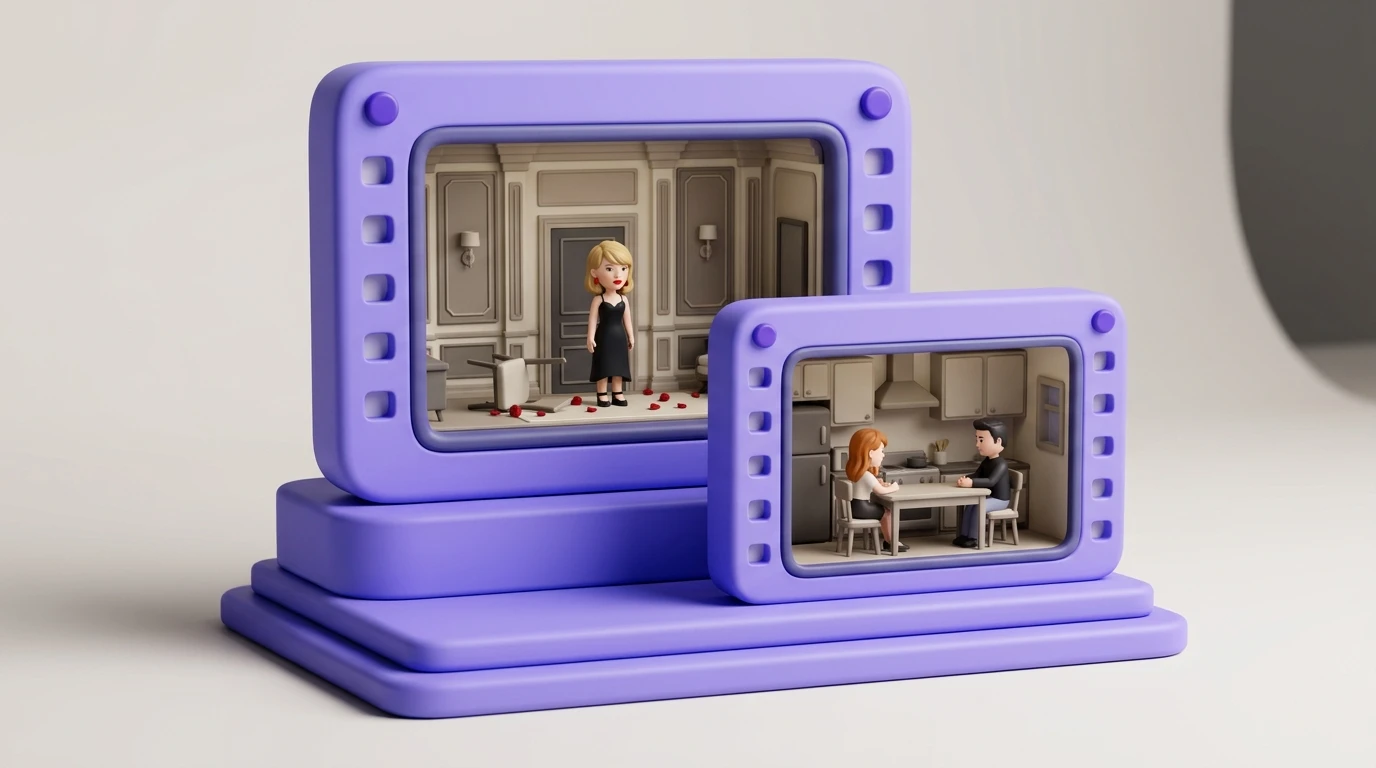
For Taylor Swift music and videos, start with “Blank Space,” directed by Joseph Kahn. It tops our visual-direction ranking for turning a polished romance into escalating disorder. “All Too Well: The Short Film” follows for performance-led storytelling. These selections show what to watch for and what artists can apply.
- Watch “Blank Space” for visual escalation and “Delicate” for storytelling through movement.
- Judge how the direction develops across the full song. A striking opening needs somewhere to go.
- Borrow a directing principle, such as repeated framing, rather than copying a location or costume.
How We Judge Taylor Swift’s Music and Videos
Visual direction is the set of choices that makes a video’s images tell a coherent story. It includes performance, framing and the relationship between the edit and the song. Expensive scenery can support that work. It cannot carry it alone.
We give the highest places to videos whose visual ideas develop as they play. A setting should gain meaning. A repeated image should change how it feels. The ending should reward watching the entire piece.
This is an editorial ranking of selected standouts, not a popularity chart or a complete catalog. “All Too Well: The Short Film” earns consideration because its direction serves the song, although its expanded format gives it more narrative room than a conventional music video.
Taylor Swift’s Best Videos, Ranked by Visual Direction
1. “Blank Space”
Joseph Kahn makes the mansion feel like an extension of the central character: immaculate at first, increasingly hostile as the relationship unravels. In the official “Blank Space” video, formal compositions give way to destruction without abandoning the polished world established at the start. The arrival of another suitor turns the ending into a reset.
Why it wins: the location keeps changing meaning. An independent artist can borrow that principle by filming the same room before and after an emotional rupture, letting performance and altered props carry the change.
2. “All Too Well: The Short Film”
Taylor Swift’s direction gives ordinary domestic moments enough space to become painful. The argument interrupts the music, forcing attention onto speech and uncomfortable pauses. Later scenes gain their weight from behavior established earlier, rather than relying entirely on the lyrics to explain the relationship.
What to borrow: establish a small gesture, then change its meaning. A hand offered early and withheld later can do more narrative work than an unrelated new location.
3. “Look What You Made Me Do”
Joseph Kahn organizes a succession of elaborate tableaux around the subject of public identity. The graveyard opening, snake imagery and gathering of past Swift personas belong to different settings, but each feeds the same argument about reputation. The final confrontation between those personas makes the earlier image changes feel deliberate.
What to borrow: give every setting the same dramatic job. A video can move between visual worlds without feeling disconnected when each scene develops one central conflict.
4. “Delicate”
The strength of Joseph Kahn’s direction is how clearly movement expresses the premise. Once Swift becomes invisible to the people around her, controlled public behavior gives way to uninhibited dancing. The official “Delicate” video makes that release readable through her body, even without dialogue explaining the change.
What to borrow: define a physical rule for the performance. Restrained movement in the verse can make an expansive chorus feel earned, even in a modest location.
5. “cardigan”
Taylor Swift connects a cabin, a lush fantasy setting and a stormy sea through recurring piano imagery. The official “cardigan” video keeps a recognizable object at the center while the surrounding world becomes less secure. Returning to the cabin gives the movement between environments a clear emotional shape.
What to borrow: choose a visual anchor before introducing new worlds. A recurring object or silhouette helps preserve continuity when backgrounds change, especially in AI-assisted production.
6. “Out of the Woods”
Joseph Kahn turns the song’s anxiety into sustained physical danger. Forest pursuit gives way to other hostile environments, while Swift’s pale blue dress provides a recognizable thread through the changes. The closing encounter with another version of herself gives that flight a destination.
What to borrow: preserve a clear silhouette when the setting changes aggressively. The viewer should recognize the protagonist immediately, without spending the next shot working out who or where they are.
7. “Anti-Hero”
Taylor Swift uses changes in scale and encounters with versions of herself to give self-criticism a physical form. An oversized Swift makes social discomfort visible, while the funeral sequence pushes the song’s anxieties into uncomfortable comedy. Its strongest choices make an internal feeling easy to read on screen.
What to borrow: translate an abstract lyric into one concrete visual relationship. Feeling out of place might become a performer whose scale clashes with the room, rather than a succession of vaguely unhappy expressions.
8. “Wildest Dreams”
Joseph Kahn builds a romantic spectacle inside a filmmaking story. The film-set framing complicates the beautiful images because intimacy performed for a camera can still have private consequences. The premiere setting changes how the viewer reads the relationship.
What to borrow: let context alter an image. A romantic close-up can acquire a different meaning when a later shot reveals who was watching or what happened outside the frame.
9. “Style”
Kyle Newman favors fragmented impressions over a conventional plot. Silhouettes and layered imagery make the relationship feel remembered rather than observed in real time. The repeated visual language keeps those fragments connected.
What to borrow: set firm compositing rules. If faces and landscapes overlap, decide which shapes recur and when they appear, so the treatment develops instead of becoming a collection of attractive overlays.
10. “You Belong with Me”
Roman White makes the story legible through neighboring windows, handwritten messages and contrasting social roles. The withheld declaration gives the final exchange a clear payoff. Its direction is less formally adventurous than the higher-ranked selections, but its setup and resolution are exceptionally easy to follow.
What to borrow: plant the ending early. A message introduced near the beginning gives the viewer something specific to wait for, making the resolution stronger than a surprise with no preparation.
Turn a Favorite Video Into an Original Brief
The most useful reference is a rule you can afford to execute. If a finished track lacks visuals and the release date is approaching, copying a mansion production creates the wrong problem. Extracting its directing principle gives you a workable starting point.
Use this sequence before collecting more references:
- Map the finished song. Mark where its emotional state changes, including any repeated chorus that feels different after the bridge.
- Assign a visible change to each turning point. Change the performance or framing for a reason the viewer can understand.
- Check continuity across the full song. Keep the protagonist recognizable, then check whether essential actions will survive the planned social crop.
Suppose your breakup single moves from control to anger, then acceptance. The principle behind “Blank Space,” orderly images disrupted by a failing relationship, could become this original apartment treatment.
| Song section | Direction for the apartment scene | What the viewer understands |
|---|---|---|
| Opening verse | Locked camera, balanced composition, performer facing an empty chair | The performer is maintaining a fragile sense of order |
| Emotional peak | The performer leaves the established position, with the camera following | The structure can no longer contain the feeling |
| Ending | Return to the opening frame, with the chair turned away | The absence remains, but the performer’s response has changed |
This keeps production contained while giving the full song an arc. A music videography workflow from treatment to final master helps turn that arc into shootable decisions before editing begins, when changes become harder to manage.
Copy this brief structure and fill it with choices specific to your track:
Track:
Central emotion:

Reference video:
Directing principle to borrow:
Original setting and story:

Opening image:
Change at the emotional peak:
Final image:

Continuity anchor:
Performance direction:
Available locations and props:

Full-song master requirements:
Planned social format:
Essential action that must remain visible in the social crop:
Avoid combining references without deciding which one governs the piece. “Delicate” may guide the performance while “Style” guides selected transitions, but the finished video still needs a consistent visual logic. Otherwise, continuity breaks as soon as the next impressive image arrives.
Where to Watch and How to Choose Your Next Video
Use Taylor Swift’s official YouTube channel to find official uploads and check recent releases. Read the upload labels carefully, since music videos, lyric videos and live performances serve different purposes.
For a broader catalog, the Taylor Swift music videos list and visual guide provides a companion to this selective ranking. Choose your next watch by the craft problem you want to solve: performance restraint points toward “Delicate,” while continuity between imagined environments points toward “cardigan.”
Frequently Asked Questions
Did Taylor Swift direct all of these music videos?
No. Swift directed “All Too Well: The Short Film,” “cardigan” and “Anti-Hero,” while other selections were directed by Joseph Kahn, Kyle Newman and Roman White.
Do Taylor’s Version recordings come with newly filmed music videos?
A rerecorded song does not automatically mean its original music video has been remade. Check the specific upload’s title and description rather than assuming the recording and film were produced together.
Can independent artists use these videos as creative references?
Yes, broad techniques such as repeated framing or movement-led storytelling can inform an original treatment. Develop your own staging and imagery, and obtain the necessary permissions before reusing any existing footage or music.
The apartment treatment works because its final frame answers its opening image. For artists ready to develop that kind of brief into a full-song video, SongTrailer combines one creative director with AI-assisted visuals and a human edit, delivering a master and social-ratio adaptation. Get in touch about your release when your finished track and visual direction are ready.