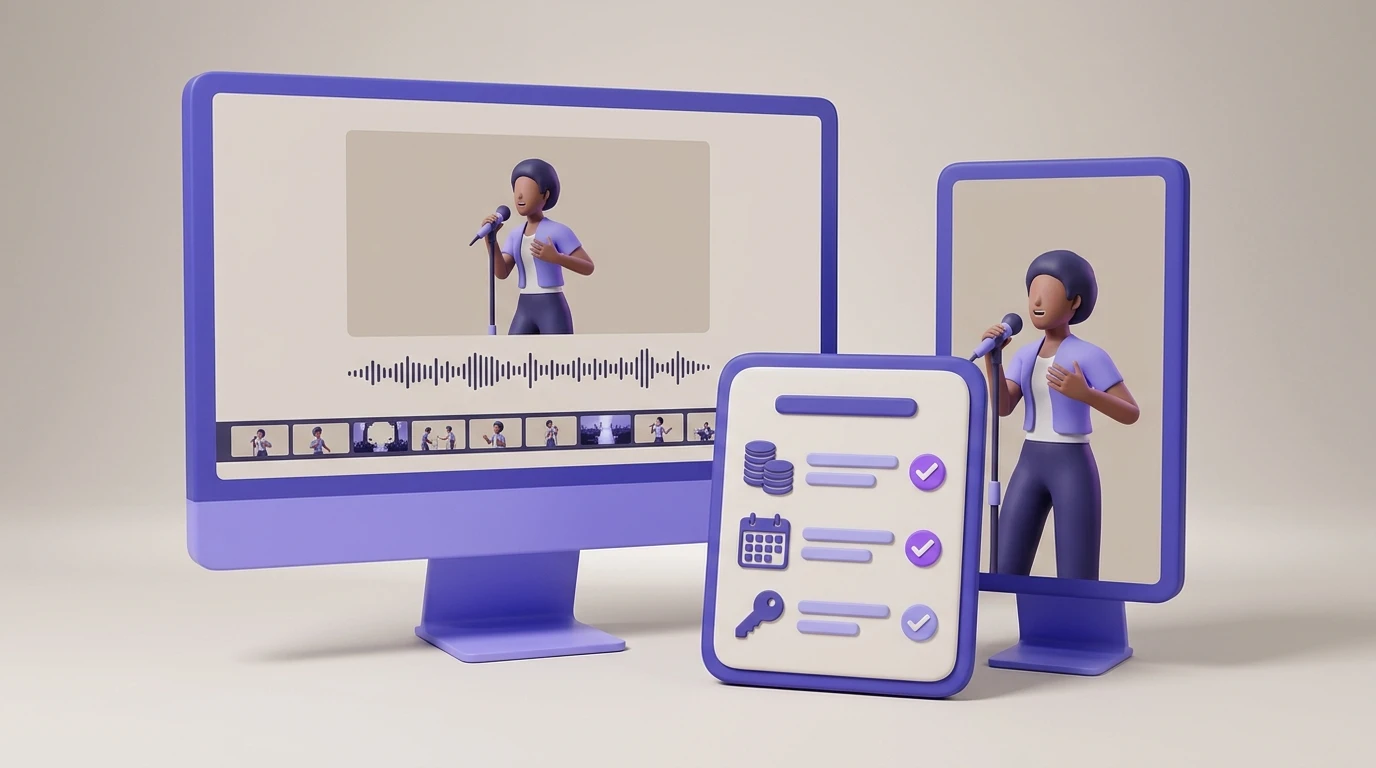
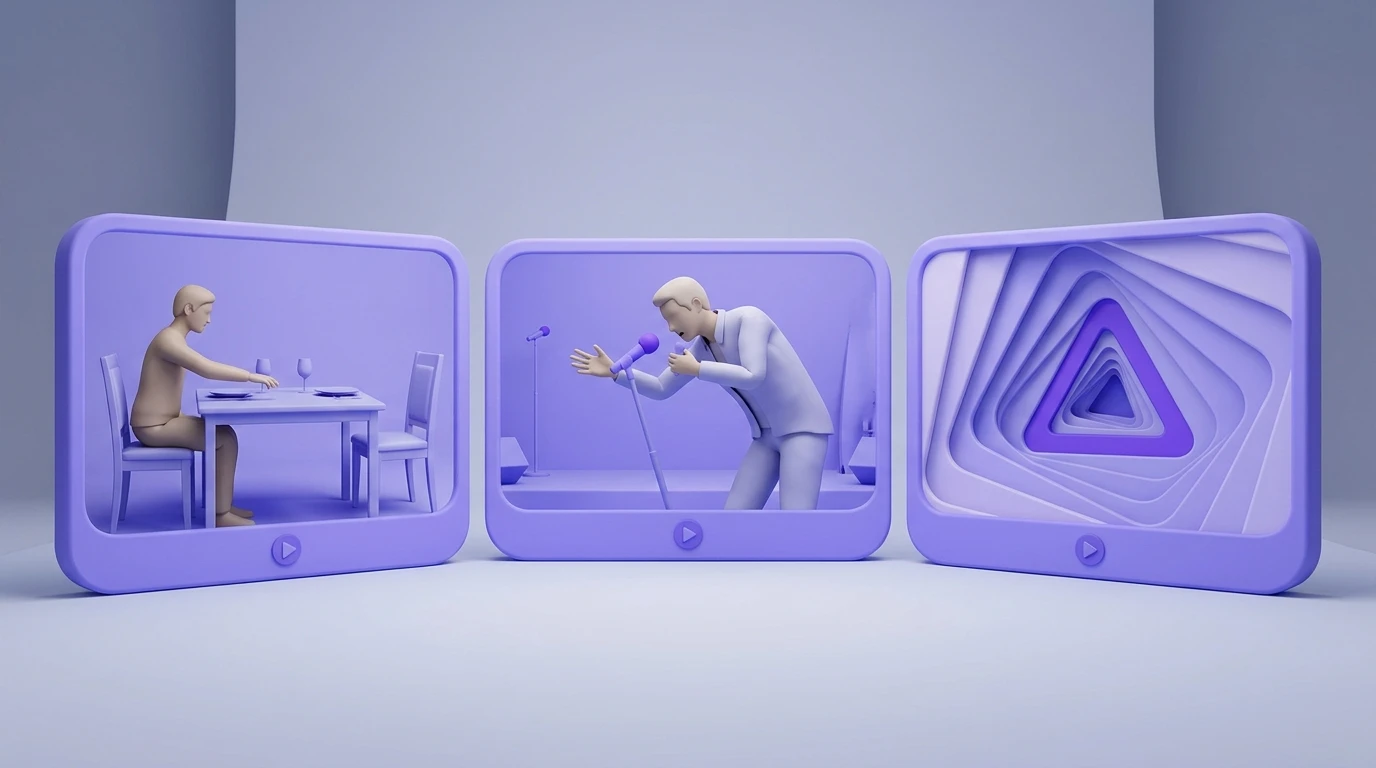
For artists searching “music videos video,” the style choice is practical: narrative tells a story, performance centers the artist, and abstract creates a visual world. Match the approach to the song’s emotional turn, then test whether it can hold attention through the full track.
- Choose the viewer’s main focus first. A story, the artist’s presence, or a visual idea should lead the video.
- Give every returning chorus a visual change. Repeated lyrics can carry new meaning through a changed setting, gesture, or image.
- Combine styles around a shared visual rule. A consistent palette alone cannot make unrelated scenes feel connected.
- Judge references by the technique you can use, rather than by their production scale.
How Do Music Video Styles Differ?
Narrative, performance, and abstract describe how a music video holds the viewer’s attention. They do not describe its production method. Animation, live-action footage, and AI-assisted visuals can serve any of these approaches.
| Style | What the viewer follows | What gives it momentum | Common weakness |
|---|---|---|---|
| Narrative | A character and a changing situation | Actions with consequences | A plot that needs explanation |
| Performance | The artist’s voice, movement, or physical presence | Changes in delivery and staging | Repeated coverage with no emotional development |
| Abstract | A mood, motif, or visual relationship | Images that evolve with the music | Attractive scenes with no shared logic |
Narrative: Give the song a visible consequence
A narrative music video follows a situation that changes. Someone wants something. Their actions affect what happens next, and the ending changes how we understand the beginning.
In a-ha’s “Take On Me”, a woman enters an illustrated world and becomes involved with a character inside it. The drawing technique creates the visual identity, while the relationship and danger give the viewer a story to follow.
For a finished single, begin with a visible action rather than a broad theme. “Isolation” is a mood. An artist setting a place for someone who never arrives gives that mood a situation.
The story should remain understandable without a spoken explanation. If its turning point depends on a character’s hidden backstory, simplify the action.
Performance: Make the artist worth watching
A performance video makes the artist’s presence the main event. Singing to camera is one option. Choreography, instrumental playing, and restrained physical acting can also carry the track.
Beyoncé’s “Single Ladies (Put a Ring on It)” centers choreography in a stripped-back, monochrome setting. Movement carries the visual interest without requiring a separate plot.
The practical question is what changes in the performance as the song develops. A restrained verse might use a distant frame. A chorus might bring the artist close enough for a small expression to matter.
A plain room can work. Repeating the same emotional delivery across the whole song is the bigger limitation.
Abstract: Build a world with its own rules
An abstract music video expresses the song through imagery rather than a conventional chain of events. A recurring shape might distort as tension rises. A room might gradually lose its familiar proportions.
The White Stripes’ “Seven Nation Army” combines band imagery with a repeating triangular tunnel. The visual structure supplies movement and continuity without a conventional storyline, making it a useful abstract-performance reference.
Abstract work still needs progression. If a doorway appears during every chorus, its changing scale or destination can give the repetition meaning.
Choose a visual rule that can develop. A collection of unrelated beautiful shots rarely gives the final chorus anywhere new to go.
Which Style Fits Your Song and Release?
Choose the style that makes the song’s strongest quality visible. A lyric built around a decisive event may suit narrative. A distinctive physical performer may benefit from performance, while a track driven by atmosphere may invite abstraction.
Genre alone should not decide. An intimate R&B song could use a direct-to-camera performance or an empty apartment that slowly floods with light. The right choice depends on whether the listener should connect primarily with the singer or inhabit the feeling around them.
Listen for the emotional change
Write down how the song feels at the opening and what has changed by the end. Then choose a style that can show that difference.
For a song moving from dependence toward resolve, a narrative could show someone finally leaving a room. Performance could shift from an averted gaze to direct eye contact. An abstract treatment could turn a confined space into an open one.
Each approach expresses the same change. Pick the one that belongs to the artist’s identity.
Price the actual scenes
Style labels do not determine production cost. A narrative set in a single room can require less coordination than a performance built around dancers and changing locations.
When comparing music video production companies for full-song releases, ask each team to assess the same treatment so that differences in scope are visible. “Performance video” is too loose a brief for a useful comparison.
An approaching release date makes dependencies especially relevant. A concept that relies on a particular location or a complicated physical effect needs a workable fallback.
Test the concept beyond the teaser
A striking opening image does not establish that the idea can sustain a full song. Describe what the viewer sees when the chorus returns and why that return feels different.
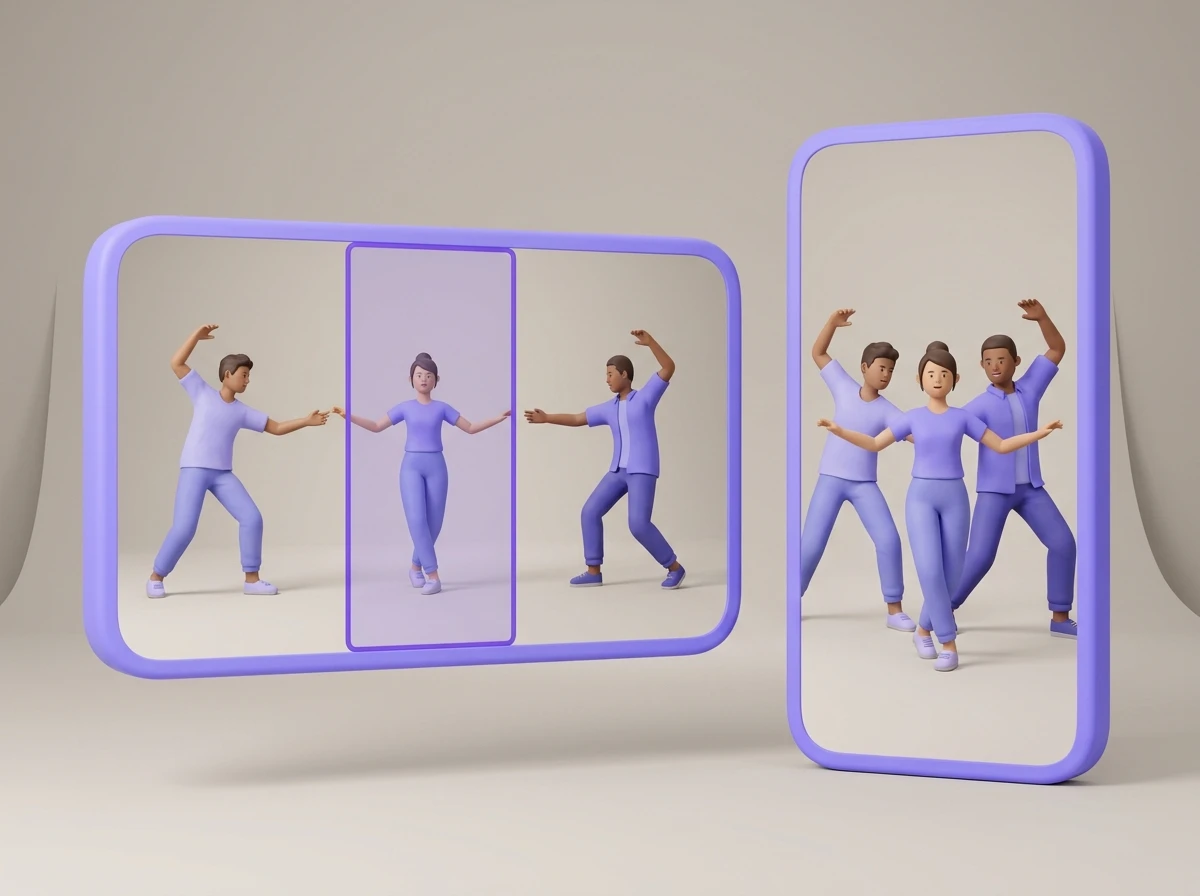
Check portrait framing early, too. A performance built around a wide group formation may need a different composition for social use, while an abstract image can lose its meaning if the defining shape disappears in the crop.
Protect the important action in every intended format. Cropping is an editorial decision when it changes what the viewer understands.
How Can You Combine Styles Without Losing Coherence?
A hybrid music video combines approaches while keeping a clear main focus. Decide which style carries the song and what the supporting style contributes.
A narrative-led video might use performance during the chorus to intensify a character’s emotion. A performance-led video might introduce abstract images only when the music moves beyond what a realistic setting can express.
The connection must be visible. If a character leaves a red-lit room, a performance scene using that same room can feel like part of the same world. An unrelated rooftop sequence needs a stronger reason to appear.
Keep continuity anchored in something specific. A recurring object can change hands. A gesture can begin as defensive and return as confident. For broader decisions about pacing, song-led music video direction starts with what each section needs the viewer to feel.
Avoid interrupting essential action. Cutting away just before a character makes a crucial choice can turn useful ambiguity into confusion.
Build a Style Brief You Can Actually Use
A style brief records why the approach fits the song and how it develops. It should give a director enough information to assess the concept without prescribing every shot.
Say you are releasing a restrained R&B single that moves from longing toward self-possession. You want the artist recognizable on screen, but a literal breakup story would explain too much.
A performance-led treatment with an abstract setting gives that song a clear route:
| Brief field | Filled example |
|---|---|
| Emotional change | Longing becomes self-possession |
| Dominant style | Performance, supported by abstract imagery |
| Artist’s role | The artist sings in a room divided by frosted glass |
| Recurring visual rule | The glass obscures the artist whenever they turn away |
| Section progression | Verses hold the artist behind the glass. Choruses bring them into clearer view. The ending leaves the barrier behind |
| Reference technique | Study how “Single Ladies” makes physical performance carry a limited setting |
| Production limits | Keep the concept within a single visual world and avoid costume-dependent story changes |
| Delivery needs | Preserve the face and the glass motif in both landscape and portrait compositions |
The glass has a job. It makes emotional distance visible, then gives the ending something concrete to resolve.
Copy this version for your own track:
Song and emotional change:
Dominant style and supporting style, if needed:
Artist’s role on screen:
Recurring visual rule:
Verse / chorus / ending progression:
Reference and exact technique to study:
Production limits:
Full-song and social-format needs:
Use references precisely. “Borrow the limited palette” gives a creative partner a usable instruction, while “make it look like this” leaves unclear which part matters.
Once the style is agreed, music videography from treatment to final master covers the wider production process. Keep the style brief focused on the idea that process must preserve.
Frequently Asked Questions
Does a narrative music video need dialogue? No. Actions and visible consequences can make the story understandable without dialogue. Spoken scenes are useful only when they add something the song and images cannot communicate on their own.
Is a lyric video an abstract music video? A lyric video can use abstract imagery, but displaying the words does not automatically make it abstract. Look at what organizes the viewing experience: reading the lyrics, following a story, or watching a visual idea develop.
Should every video on an EP use the same style? No. Different songs can use different styles while sharing a recognizable visual identity. A recurring setting or image can connect a narrative release to a performance-led one without forcing both into the same structure.
The frosted-glass concept works because the image has a purpose and changes with the song. Apply that test to your own brief before committing to scenes. To turn an agreed direction into a full-song video, get in touch with SongTrailer, where one creative director owns the concept through final delivery using human direction and AI-assisted visuals.